
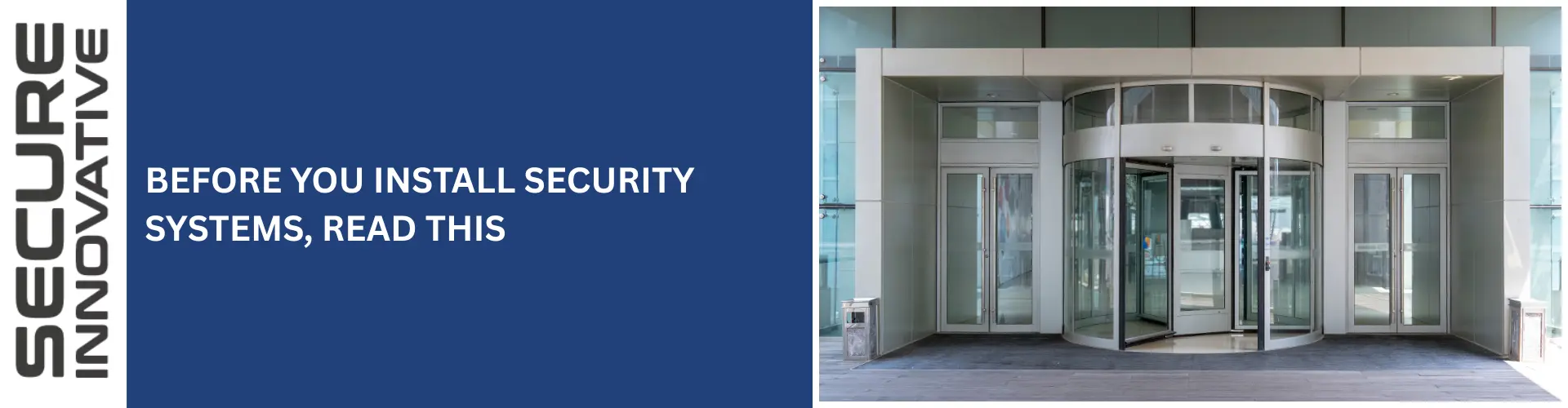
Top 10 Entrance Control Solutions for Commercial & Critical Infrastructure
Selecting the right entrance control solution is essential for protecting people, assets and critical infrastructure while ensuring smooth daily operations. This guide explains the ten most widely used entrance control systems, their applications, benefits and how to choose the best solution for your facility.
Quick Answer
The best entrance control solution depends on your facility's security requirements, pedestrian traffic, vehicle movement and operational workflow. Corporate offices typically use flap barriers and speed gates, industrial facilities rely on boom barriers and automatic gates, while airports, defence installations and government facilities require crash rated bollards, road blockers and other Hostile Vehicle Mitigation (HVM) systems to protect against vehicle threats.
Why Entrance Control Solutions Matter
Entrance control is the first layer of physical security for any facility. Whether managing pedestrian access to an office building or controlling vehicle entry into a critical infrastructure site, the right solution helps prevent unauthorised access while ensuring smooth movement for employees, visitors, contractors and authorised vehicles.
Today's organisations face a wide range of security challenges, including unauthorised entry, tailgating, vehicle intrusion, identity verification, visitor management and compliance with corporate or government security policies. Modern entrance control systems address these risks by combining physical barriers with intelligent technologies such as RFID, biometric authentication, QR code access, Automatic Number Plate Recognition (ANPR) and centralised access control software.
The appropriate solution depends on several factors including the level of security required, expected pedestrian and vehicle traffic, available installation space, accessibility requirements and integration with existing security infrastructure. Selecting the wrong system can create operational bottlenecks, increase maintenance costs and leave security vulnerabilities that may affect business continuity.
For this reason, architects, consultants, facility managers and security planners increasingly adopt a layered security approach that combines pedestrian entrance control, vehicle access management and Hostile Vehicle Mitigation (HVM) solutions to provide comprehensive protection for commercial and critical infrastructure projects.
1. Tripod Turnstiles
Tripod Turnstiles are among the most widely used pedestrian entrance control solutions for commercial buildings, educational institutions, factories and corporate offices. Designed to regulate one person at a time, they help prevent unauthorised access while maintaining a smooth flow of authorised users.
Modern tripod turnstiles can be integrated with RFID cards, biometric readers, QR code scanners and facial recognition systems, making them suitable for facilities requiring reliable access control with minimal maintenance.
Best Applications
- Corporate Offices
- Manufacturing Plants
- Educational Institutions
- Commercial Buildings
- Warehouses
- Industrial Facilities
Key Advantages
- Cost-effective pedestrian access control
- High throughput during peak hours
- Easy integration with access control software
- Compact footprint
- Low maintenance requirements
- Indoor and outdoor installation options
Things to Consider
- Not suitable for wheelchair access.
- Limited luggage movement.
- Premium corporate environments may prefer flap barriers or speed gates.
2. Flap Barrier Gates
Flap Barrier Gates are designed for facilities where security must be combined with modern architecture and a premium visitor experience. Unlike traditional turnstiles, flap barriers use retractable glass panels that open automatically after successful authentication, creating a smooth and aesthetically pleasing access experience.
These systems are widely used in corporate headquarters, IT parks, financial institutions and premium commercial developments where appearance, speed and intelligent access control are equally important.
Best Applications
- Corporate Headquarters
- IT Parks
- Business Centres
- Financial Institutions
- Commercial Complexes
Key Advantages
- Elegant architectural appearance
- Fast pedestrian throughput
- Supports RFID, QR and biometric authentication
- Quiet and smooth operation
- Improves visitor experience
Things to Consider
- Higher investment than tripod turnstiles.
- Primarily designed for indoor environments.
- Requires regular preventive maintenance.
3. Swing Barrier Gates
Swing Barrier Gates are ideal where accessibility, flexibility and controlled pedestrian movement are required. Unlike tripod turnstiles, swing barriers provide wider passage widths, making them suitable for wheelchair users, visitors carrying luggage and facilities requiring compliance with accessibility standards.
These systems integrate seamlessly with access control software and can operate using RFID cards, biometric readers, QR codes and visitor management platforms.
Best Applications
- Hospitals
- Hotels
- Airports
- Government Buildings
- Commercial Offices
- Public Infrastructure
Key Advantages
- Wheelchair accessible
- Suitable for luggage and trolleys
- Smooth and silent operation
- Flexible lane width
- Modern appearance
Things to Consider
- Provides lower physical resistance than full-height turnstiles.
- Best used with electronic access control and CCTV monitoring.
Quick Comparison
| Solution | Security Level | Traffic Volume | Accessibility | Typical Applications |
|---|---|---|---|---|
| Tripod Turnstile | Medium | High | No | Factories, Offices |
| Flap Barrier | High | High | Limited | Corporate Offices, IT Parks |
| Swing Barrier | Medium | Medium | Yes | Hospitals, Hotels, Public Buildings |
4. Speed Gates
Speed Gates are premium pedestrian entrance control systems designed for facilities where security, aesthetics and high throughput are equally important. Unlike traditional turnstiles, speed gates use motorised glass barriers that open and close rapidly after successful authentication, creating a seamless access experience for employees and visitors.
These systems are commonly installed in modern corporate headquarters, financial institutions, technology parks and commercial buildings where first impressions, user convenience and intelligent access control are key priorities.
Best Applications
- Corporate Headquarters
- IT & Technology Parks
- Financial Institutions
- Commercial Office Towers
- Business Centres
- Premium Mixed-Use Developments
Key Advantages
- Premium architectural appearance
- Very high pedestrian throughput
- Fast opening and closing cycles
- Supports RFID, QR, biometric and facial recognition
- Anti-tailgating detection (selected models)
- Low operational noise
Things to Consider
- Higher initial investment compared to tripod turnstiles.
- Recommended for indoor installations.
- Requires periodic preventive maintenance.
5. Full Height Turnstiles
Full Height Turnstiles provide one of the highest levels of pedestrian entrance security available without requiring a permanently staffed checkpoint. Their floor-to-ceiling rotating structure prevents climbing, crawling or bypassing, making them suitable for facilities requiring strict access control.
They are commonly installed in industrial facilities, utilities, logistics centres, stadiums, military installations and other high-security environments where unauthorised entry must be prevented.
Best Applications
- Industrial Plants
- Warehouses
- Power Plants
- Defence Facilities
- Logistics Parks
- Stadiums
Key Advantages
- Maximum pedestrian security
- Prevents climbing and tailgating
- Suitable for outdoor installation
- Heavy-duty construction
- Long operational life
- Compatible with RFID and biometric readers
Things to Consider
- Not suitable for wheelchair access.
- Separate accessible entrance should always be provided.
- Requires adequate installation space.
6. Boom Barriers
Boom Barriers remain one of the most widely deployed vehicle entrance control solutions across commercial, industrial and residential developments. They regulate authorised vehicle access while maintaining smooth traffic flow and integrating easily with intelligent access control systems.
Modern boom barriers support RFID readers, Automatic Number Plate Recognition (ANPR), ticketing systems, QR code access, parking management software and remote monitoring platforms, making them suitable for both standalone installations and integrated security systems.
Best Applications
- Commercial Complexes
- Corporate Offices
- Residential Communities
- Industrial Facilities
- Parking Management Systems
- Logistics Centres
Key Advantages
- Fast vehicle access control
- Suitable for high traffic volumes
- Low maintenance
- Supports ANPR and RFID integration
- Available in multiple boom lengths
- Easy integration with parking systems
Things to Consider
- Boom barriers regulate vehicle access but do not stop deliberate hostile vehicle attacks.
- Critical infrastructure projects should combine boom barriers with crash rated bollards or road blockers where higher vehicle security is required.
Which Solution Is Right for Your Facility?
| Solution | Security Level | Traffic Volume | Indoor / Outdoor | Best For |
|---|---|---|---|---|
| Speed Gates | High | Very High | Indoor | Corporate Headquarters |
| Full Height Turnstiles | Very High | Medium | Outdoor | Industrial & Defence |
| Boom Barriers | Vehicle Control | Very High | Indoor / Outdoor | Parking & Vehicle Entry |
7. Automatic Sliding Gates
Automatic Sliding Gates are one of the most reliable vehicle entrance control solutions for facilities requiring secure, space-efficient and automated vehicle access. Unlike swing gates, sliding gates move horizontally along a track or cantilever system, making them ideal where space behind the gate is limited.
These gates are widely used in manufacturing plants, logistics hubs, industrial facilities, warehouses and commercial campuses where durability, operational reliability and controlled vehicle movement are essential.
Best Applications
- Manufacturing Plants
- Industrial Facilities
- Warehouses
- Commercial Campuses
- Logistics Parks
- Large Residential Communities
Key Advantages
- Suitable for wide entrances
- Reliable automated operation
- Excellent wind resistance
- Supports RFID, ANPR and biometric integration
- Low maintenance with proper installation
- Ideal where swing clearance is unavailable
Things to Consider
- Requires sufficient side stacking space.
- Track maintenance is important for long-term performance.
- For hostile vehicle protection, crash-rated sliding gates should be specified instead of standard automated gates.
8. Crash Rated Bollards
Crash Rated Bollards are specialised Hostile Vehicle Mitigation (HVM) systems engineered to stop unauthorised or hostile vehicles before they reach protected assets. Unlike decorative or traffic bollards, crash rated bollards are independently tested to recognised international standards such as ASTM F2656, PAS 68 and IWA 14-1.
These systems are increasingly specified for airports, government buildings, embassies, defence facilities, data centres, financial institutions and critical infrastructure where vehicle-borne threats must be mitigated without restricting authorised access.
Best Applications
- Airports
- Government Buildings
- Embassies
- Data Centres
- Power Plants
- Critical Infrastructure
- Commercial Headquarters
Key Advantages
- Hostile Vehicle Mitigation (HVM)
- Crash tested to recognised international standards
- Hydraulic, automatic, fixed and removable configurations
- Suitable for high-security facilities
- Can integrate with access control systems
- Long operational life with proper maintenance
International Standards
- ASTM F2656
- PAS 68
- IWA 14-1
- ISO 22343 (Guidance for HVM)
9. Road Blockers
Road Blockers provide one of the highest levels of vehicle access security available today. Designed for facilities facing elevated security risks, they create a physical barrier capable of resisting high-impact vehicle attacks while allowing authorised vehicles to enter through controlled operation.
Road blockers are commonly specified at military installations, embassies, nuclear facilities, government buildings and other critical infrastructure projects where vehicle stopping capability is a primary design requirement.
Best Applications
- Military Installations
- Defence Facilities
- Embassies
- Government Buildings
- Power Plants
- Critical Infrastructure
Key Advantages
- Maximum vehicle stopping capability
- Fast hydraulic operation
- Heavy-duty construction
- Suitable for intensive operation
- Supports emergency operation modes
- Compatible with integrated access control systems
Things to Consider
- Requires civil foundation planning.
- Proper drainage is essential.
- Preventive maintenance should be included in the facility management plan.
10. Mantrap Doors
Mantrap Doors are advanced entrance control systems designed to prevent tailgating and unauthorised entry into highly secure environments. The system consists of two interlocked doors that ensure only one authorised individual enters at a time after successful authentication.
By combining biometric verification, RFID credentials, weight sensors and security software, mantrap doors significantly enhance protection for sensitive facilities where access must be tightly controlled.
Best Applications
- Data Centres
- Banks
- Research Laboratories
- Pharmaceutical Facilities
- Government Buildings
- High Security Server Rooms
Key Advantages
- Prevents tailgating
- Supports multi-factor authentication
- Integrates with access control software
- High security for sensitive areas
- Improves compliance with security policies
- Professional architectural appearance
Things to Consider
- Requires adequate installation space.
- User training may be required during commissioning.
- Ideal for restricted-access environments rather than general public entrances.
Comparison of the Top 10 Entrance Control Solutions
| Solution | Pedestrian | Vehicle | Security Level | Best Application |
|---|---|---|---|---|
| Tripod Turnstile | ✔ | — | Medium | Offices & Factories |
| Flap Barrier | ✔ | — | High | Corporate Offices |
| Swing Barrier | ✔ | — | Medium | Hospitals & Public Buildings |
| Speed Gate | ✔ | — | High | Premium Offices |
| Full Height Turnstile | ✔ | — | Very High | Industrial & Defence |
| Boom Barrier | — | ✔ | Medium | Parking & Vehicle Entry |
| Automatic Sliding Gate | — | ✔ | High | Industrial Facilities |
| Crash Rated Bollards | — | ✔ | Very High | Critical Infrastructure |
| Road Blockers | — | ✔ | Maximum | Military & Government |
| Mantrap Doors | ✔ | — | Maximum | Data Centres & Banking |
How to Choose the Right Entrance Control Solution
Selecting an entrance control solution is not simply about choosing a product—it involves understanding your facility's security objectives, operational requirements, user experience and future expansion plans. A well-designed entrance control strategy improves security while ensuring efficient movement of people and vehicles.
Before specifying any entrance control equipment, evaluate the following factors to ensure the selected solution aligns with your project's operational and security requirements.
Key Factors to Consider
| Factor | Questions to Ask | Recommended Solutions |
|---|---|---|
| Security Level | How critical is the facility? | Crash Rated Bollards, Road Blockers, Full Height Turnstiles |
| Pedestrian Traffic | How many people enter every day? | Tripod Turnstiles, Flap Barriers, Speed Gates |
| Vehicle Traffic | How many vehicles require access? | Boom Barriers, Sliding Gates |
| Accessibility | Is wheelchair access required? | Swing Barrier Gates |
| Space Availability | Is installation space limited? | Sliding Gates, Bollards |
| Security Integration | Will the system connect with access control software? | All Automated Solutions |
| Future Expansion | Will the facility grow? | Scalable Integrated Systems |
Recommended Solutions by Industry
| Industry | Recommended Entrance Control Solutions |
|---|---|
| Corporate Offices | Speed Gates, Flap Barrier Gates, Boom Barriers |
| Manufacturing Plants | Tripod Turnstiles, Sliding Gates, Boom Barriers |
| Warehouses | Full Height Turnstiles, Automatic Sliding Gates |
| Data Centres | Mantrap Doors, Crash Rated Bollards |
| Airports | Crash Rated Bollards, Road Blockers, Boom Barriers |
| Government Buildings | Road Blockers, Full Height Turnstiles, HVM Bollards |
| Defence Installations | Road Blockers, Crash Rated Gates, Crash Rated Bollards |
| Hospitals | Swing Barrier Gates, Boom Barriers |
| Educational Campuses | Tripod Turnstiles, Boom Barriers |
| Commercial Complexes | Flap Barriers, Speed Gates, Sliding Gates |
Consultant & Security Planner Checklist
Before finalising your entrance control specification, verify the following:
- ✔ Security risk assessment completed.
- ✔ Daily pedestrian and vehicle traffic analysed.
- ✔ Accessibility requirements reviewed.
- ✔ Emergency evacuation routes confirmed.
- ✔ Access control integration requirements identified.
- ✔ CCTV surveillance coverage planned.
- ✔ Foundation and civil requirements verified.
- ✔ Power supply and communication cabling planned.
- ✔ Future expansion requirements considered.
- ✔ Maintenance and lifecycle costs evaluated.
Common Mistakes to Avoid
❌ Common Mistakes
- Selecting products based only on price.
- Ignoring future expansion.
- Not considering accessibility.
- Installing boom barriers where HVM protection is required.
- Choosing decorative bollards instead of crash-rated bollards.
- Ignoring preventive maintenance.
- Lack of integration with access control software.
✅ Best Practices
- Conduct a professional security risk assessment.
- Choose internationally tested products.
- Integrate all entrance control systems.
- Plan for future operational growth.
- Consider lifecycle cost instead of purchase price.
- Use certified HVM products for critical infrastructure.
- Work with experienced security solution providers.
Expert Recommendations
Corporate Offices
Use Speed Gates or Flap Barrier Gates combined with Boom Barriers to provide a professional appearance while maintaining efficient pedestrian and vehicle access.
Industrial Facilities
Combine Automatic Sliding Gates, Tripod Turnstiles and Boom Barriers to separate pedestrian and vehicle movement while improving operational efficiency.
Critical Infrastructure
Where hostile vehicle attacks are a concern, combine Crash Rated Bollards, Road Blockers, High Security Gates, CCTV and access control systems to create a layered security strategy.
Key Takeaways
- Entrance control should be selected based on operational requirements—not product popularity.
- Pedestrian and vehicle security require different technologies.
- Critical infrastructure projects require certified Hostile Vehicle Mitigation (HVM) systems.
- Integrated security always performs better than standalone products.
- International standards such as ASTM F2656, PAS 68, IWA 14-1 and ISO 22343 should be considered when specifying high-security vehicle mitigation systems.
- Working with an experienced manufacturer ensures proper product selection, installation and long-term reliability.
How to Choose the Right Entrance Control Solution
Selecting the right entrance control solution depends on the facility type, security risks, pedestrian flow, vehicle traffic and future operational requirements. Rather than selecting products individually, organisations should design a layered entrance security strategy that combines pedestrian access control, vehicle access management and Hostile Vehicle Mitigation (HVM) where required.
Step 1 – Assess the Security Risk
Begin by identifying the level of protection required. A commercial office has different security requirements than an airport, defence installation or data centre. Facilities exposed to vehicle threats should consider crash rated bollards or road blockers in addition to conventional entrance control systems.
Step 2 – Evaluate Daily Traffic
Estimate the number of pedestrians and vehicles entering the facility each day. High pedestrian volumes may require speed gates or flap barriers, while busy vehicle entrances benefit from automated boom barriers and sliding gates.
Step 3 – Plan for Integration
Modern entrance control systems should integrate with RFID readers, biometric devices, visitor management software, CCTV, ANPR cameras and centralised access control platforms to improve security and operational efficiency.
Step 4 – Consider Future Expansion
Facilities often grow over time. Selecting scalable entrance control systems reduces future upgrade costs and allows additional lanes, gates or access technologies to be integrated without major infrastructure changes.
Key Takeaways
- Entrance control is the first layer of physical security.
- Select solutions based on operational requirements—not only cost.
- Different facilities require different levels of pedestrian and vehicle security.
- Critical infrastructure should incorporate Hostile Vehicle Mitigation (HVM) solutions.
- Integrated security provides significantly better protection than standalone products.
- Choose systems compatible with RFID, biometrics, ANPR and access control software.
- Always consider future expansion during the design stage.
People Also Ask
What is an entrance control system?
An entrance control system combines physical barriers and electronic access technologies to regulate the movement of people and vehicles into secure facilities.
Which entrance control solution is best for offices?
Corporate offices typically use Speed Gates, Flap Barriers and RFID access control systems because they combine security, high throughput and premium aesthetics.
Which entrance control solution is best for factories?
Factories commonly use Tripod Turnstiles for pedestrian access and Boom Barriers or Automatic Sliding Gates for vehicle management.
What is the difference between Boom Barriers and Road Blockers?
Boom Barriers regulate authorised vehicle access but are not designed to stop hostile vehicle attacks. Road Blockers are engineered to physically stop vehicles and are used in high-security environments.
When are Crash Rated Bollards required?
Crash Rated Bollards are recommended wherever facilities must protect people and infrastructure from deliberate or accidental vehicle impact, particularly airports, government buildings, embassies, data centres and defence installations.
Consultant's Entrance Control Checklist
| Requirement | Status |
|---|---|
| Security Risk Assessment Completed | ☐ |
| Pedestrian Traffic Evaluated | ☐ |
| Vehicle Traffic Analysed | ☐ |
| Accessibility Requirements Considered | ☐ |
| Emergency Egress Reviewed | ☐ |
| Access Control Integration Planned | ☐ |
| CCTV Coverage Confirmed | ☐ |
| Future Expansion Considered | ☐ |
| Maintenance Requirements Reviewed | ☐ |
| Applicable Security Standards Identified | ☐ |
Common Mistakes to Avoid
- Selecting products based only on price.
- Ignoring future expansion requirements.
- Using decorative bollards instead of crash rated bollards in high-risk locations.
- Failing to integrate entrance control with CCTV and access control software.
- Underestimating pedestrian traffic during peak hours.
- Not considering accessibility requirements.
- Ignoring maintenance and lifecycle costs.
- Choosing non-certified products for critical infrastructure projects.
Summary
Entrance control solutions play a critical role in protecting commercial buildings, industrial facilities and critical infrastructure. The ideal solution depends on security objectives, pedestrian and vehicle traffic, compliance requirements and operational workflows. By combining intelligent access control with physical security systems such as turnstiles, boom barriers, crash rated bollards, road blockers and mantrap doors, organisations can create secure, efficient and future-ready facilities.
Frequently Asked Questions (FAQs)
1. What is an entrance control solution?
An entrance control solution is a combination of physical security equipment and access control technology used to regulate pedestrian or vehicle entry into a facility. It helps prevent unauthorized access while allowing smooth movement for authorized users.
2. Which entrance control solution is best for office buildings?
Corporate offices commonly use Flap Barrier Gates or Speed Gates integrated with RFID cards, QR codes or biometric authentication to provide secure, fast and professional access management.
3. What is the difference between a Tripod Turnstile and a Flap Barrier?
Tripod Turnstiles are economical and suitable for medium-security applications, whereas Flap Barrier Gates offer higher throughput, better aesthetics and a more comfortable user experience for premium commercial environments.
4. Are Boom Barriers enough for high-security facilities?
Boom Barriers regulate vehicle access but are not designed to stop hostile vehicle attacks. Critical infrastructure projects should combine boom barriers with Crash Rated Bollards or Road Blockers for enhanced protection.
5. What are Crash Rated Bollards?
Crash Rated Bollards are Hostile Vehicle Mitigation (HVM) systems designed to stop unauthorized or hostile vehicles. They are independently tested to international standards such as ASTM F2656, PAS 68 and IWA 14-1.
6. Where are Road Blockers commonly installed?
Road Blockers are typically installed at airports, military bases, embassies, government facilities, power plants and other critical infrastructure requiring maximum vehicle stopping capability.
7. What is the purpose of a Mantrap Door?
A Mantrap Door prevents tailgating by allowing only one authenticated person to enter a secure area at a time. It is widely used in data centres, banking facilities and research laboratories.
8. Which entrance control system is suitable for industrial facilities?
Industrial facilities often combine Full Height Turnstiles, Boom Barriers, Automatic Sliding Gates and access control software to secure both pedestrian and vehicle entry points.
9. Can entrance control systems integrate with access control software?
Yes. Modern entrance control solutions support integration with RFID readers, biometric devices, QR code systems, ANPR cameras, visitor management software and centralized security platforms.
10. Which international standards are relevant for Hostile Vehicle Mitigation?
The most widely recognized standards include ASTM F2656, PAS 68, IWA 14-1 and ISO 22343 guidance for Hostile Vehicle Mitigation (HVM) solutions.
11. How do I choose the right entrance control solution?
Selection depends on security level, pedestrian volume, vehicle traffic, accessibility requirements, available installation space, operational workflow and integration with existing security systems.
12. Why should consultants specify integrated entrance control solutions?
An integrated approach combining pedestrian access control, vehicle management, surveillance and Hostile Vehicle Mitigation provides better operational efficiency and significantly stronger physical security than relying on a single product.
People Also Ask
- What is the best entrance control system for commercial buildings?
- What is the difference between Speed Gates and Flap Barriers?
- Are Crash Rated Bollards mandatory for critical infrastructure?
- Which entrance control solution is suitable for airports?
- How do Road Blockers work?
- What is Hostile Vehicle Mitigation (HVM)?
- How do Full Height Turnstiles improve security?
- What is the difference between access control and entrance control?
Key Takeaways
- Select entrance control systems based on risk assessment rather than product cost.
- Use separate solutions for pedestrian and vehicle access where appropriate.
- Combine physical security with electronic access control for maximum protection.
- Crash Rated Bollards and Road Blockers should be specified where hostile vehicle threats exist.
- Integrated entrance control improves operational efficiency, compliance and long-term security.
Need Help Choosing the Right Entrance Control Solution?
Every project has unique security challenges. Whether you're designing a corporate office, airport, government building, industrial facility or critical infrastructure, selecting the right entrance control solution requires careful evaluation of security risks, traffic flow, operational requirements and applicable international standards.
Our engineering team works closely with architects, consultants, EPC contractors, PMCs and security planners to recommend solutions that deliver the right balance of security, operational efficiency and long-term reliability.
We Can Help With
- Entrance Control Planning
- Hostile Vehicle Mitigation (HVM)
- Crash Rated Security Solutions
- Pedestrian Access Control
- Vehicle Access Control
- Security Risk Assessment Support
- Product Selection Guidance
- Project Specific Technical Consultation
Contact Secure Innovative
Secure Innovative Solutions LLP
📍 Ahmedabad, Gujarat, India
📞 +91 85114 24215
📧 info@secure-india.com
Related Articles
Explore Our Entrance Control Product Range
About Secure Innovative
Secure Innovative Solutions LLP is an Indian manufacturer of Entrance Control, Hostile Vehicle Mitigation (HVM) and Perimeter Security Systems engineered for commercial, industrial and critical infrastructure projects.
Our portfolio includes crash rated bollards, road blockers, automatic bollards, tyre killers, boom barriers, turnstiles, speed gates, automatic gates, mantrap doors and perimeter protection systems designed to meet demanding security requirements.
We work with architects, consultants, EPC contractors, system integrators, facility managers and government organisations to deliver customised security solutions backed by technical expertise and international best practices.


