Common Mistakes Civil Engineers Should Avoid When Planning HVM Gates
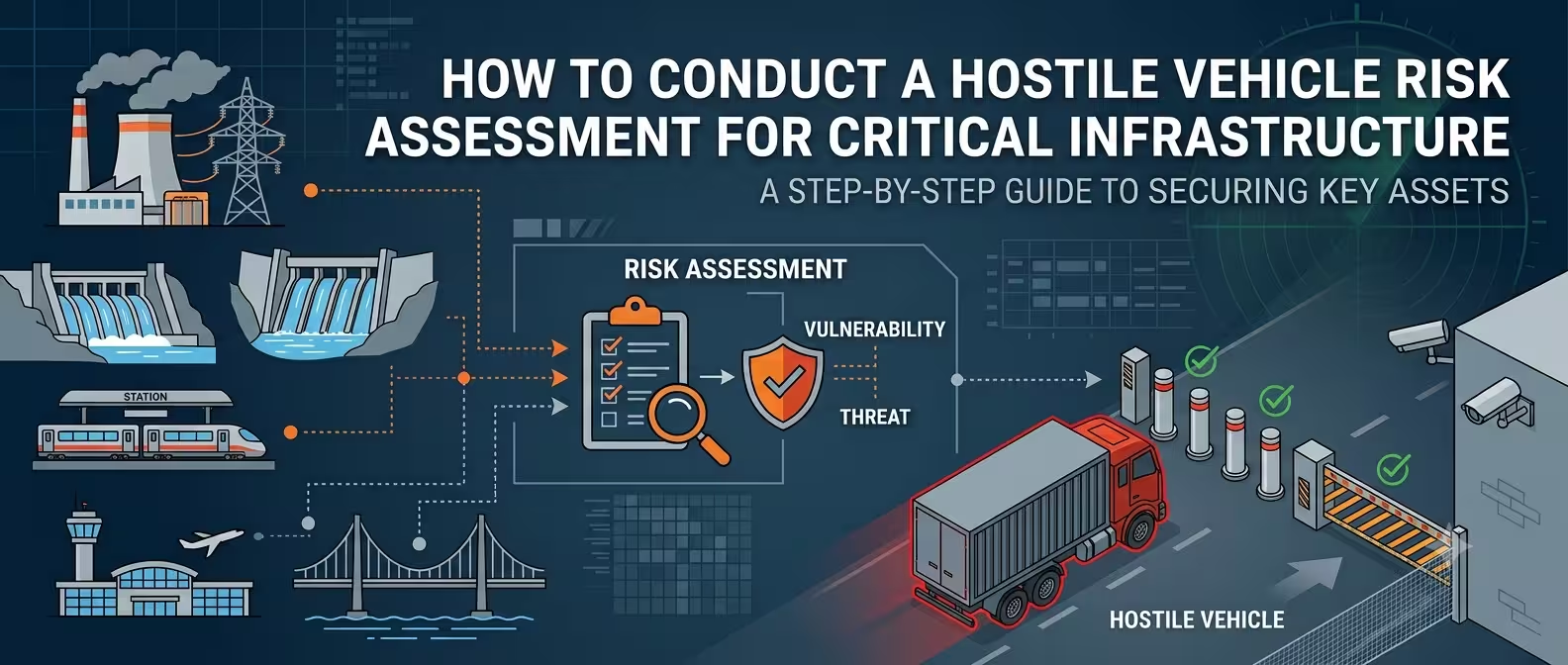
Crash-rated Hostile Vehicle Mitigation (HVM) gates are complex engineered systems that require close coordination between civil engineers, structural consultants, architects, MEP engineers, security consultants, and gate manufacturers. Many installation issues occur not because of the gate itself, but because critical civil engineering requirements are overlooked during the planning stage.
Identifying these challenges early helps prevent costly modifications, project delays, and performance issues after installation.
1. Underestimating Foundation Requirements
A crash-rated gate transfers enormous impact forces into its reinforced concrete foundation during a vehicle collision. Designing foundations based only on gate dimensions rather than certified engineering drawings can compromise the entire system.
Always follow the manufacturer's approved foundation drawings and reinforcement details for the certified crash-tested configuration.
2. Ignoring Underground Utilities
Before excavation begins, engineers should identify all underground services including electrical cables, drainage pipelines, water lines, communication ducts, gas pipelines, and existing foundations.
Unexpected utility conflicts are one of the most common causes of installation delays.
3. Poor Drainage Planning
Many HVM gate systems include below-ground civil works. Without proper drainage, water accumulation can affect equipment life, maintenance accessibility, and overall system reliability.
Drainage channels, sump pits, waterproofing, and suitable slopes should be incorporated into the civil design from the beginning.
4. Insufficient Vehicle Approach Distance
Crash-rated gates require adequate approach and departure zones for safe vehicle movement and effective operation. Limited space may reduce operational efficiency or require alternative HVM solutions such as bollards or road blockers.
5. Lack of Coordination Between Disciplines
Civil, electrical, security, automation, and architectural teams should coordinate before construction starts. Gate motors, control cabinets, cable routing, safety sensors, access control devices, and emergency systems all require predefined locations.
Early coordination minimizes site modifications and commissioning delays.
6. Selecting Products Without Certified Crash Testing
Decorative security gates or heavy-duty industrial gates should not be assumed to provide hostile vehicle protection. Civil engineers should specify products independently tested to internationally recognised standards such as ASTM F2656, PAS 68, or IWA 14-1 whenever crash performance is required.
7. Ignoring Maintenance Access
Adequate maintenance space should be provided around gate operators, hydraulic units, electrical panels, and control equipment. Restricted access can increase servicing time and long-term operating costs.
8. Designing Without Future Expansion
Many critical infrastructure facilities expand over time. Civil engineers should consider future lane additions, security upgrades, access control integration, and utility expansion while designing the gate area.
Civil Engineering Best Practices for HVM Projects
- Review certified manufacturer foundation drawings before construction.
- Coordinate with structural, MEP, and security consultants during design.
- Conduct utility surveys before excavation.
- Provide adequate drainage and waterproofing.
- Verify vehicle turning radius and traffic flow.
- Ensure sufficient maintenance clearance around equipment.
- Specify internationally certified crash-rated products.
- Plan for future infrastructure expansion.
Engineering Insight:
The performance of a crash-rated HVM gate depends not only on the gate itself but also on proper civil works, reinforced concrete foundations, installation quality, and compliance with the certified crash-tested configuration. Early collaboration between the project team and the HVM manufacturer significantly reduces project risks and ensures long-term operational reliability.