
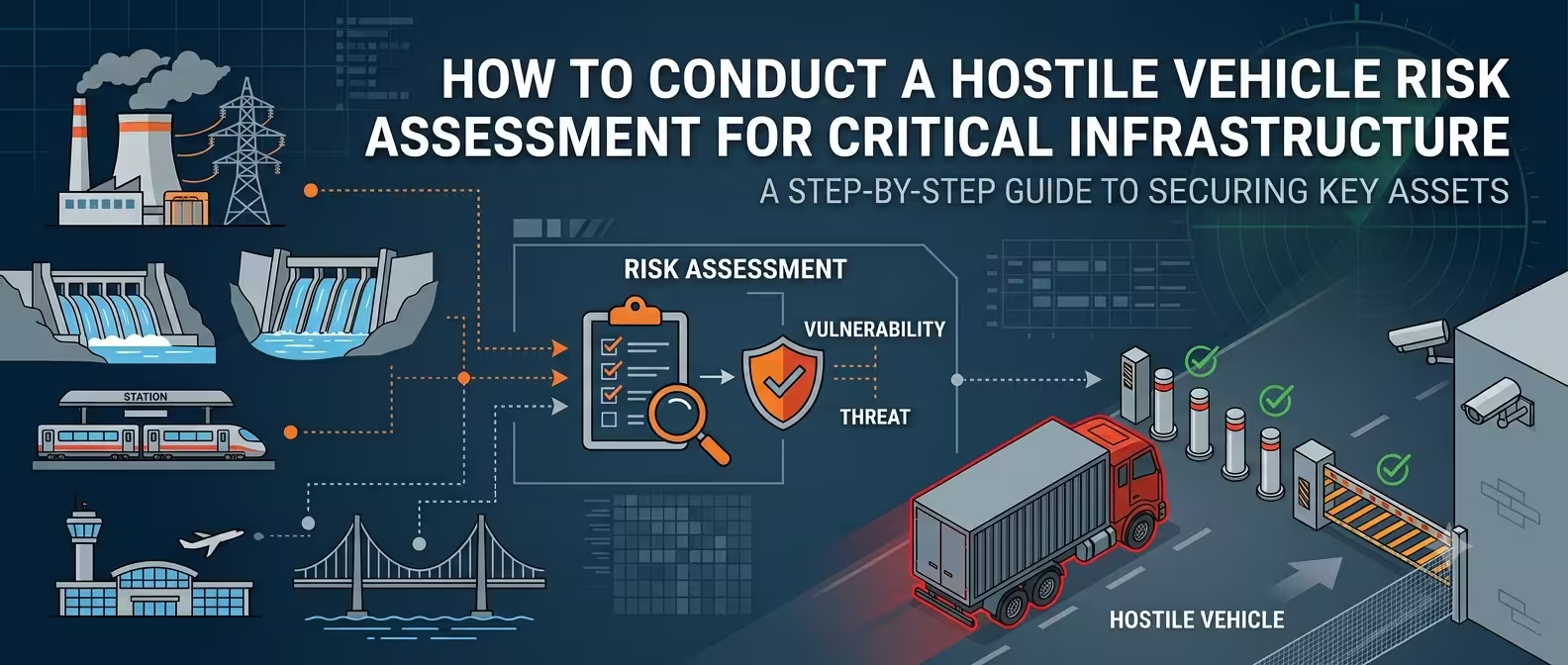
How to Conduct a Hostile Vehicle Risk Assessment for Critical Infrastructure
Published: August 01, 2026 - Updated by Secure Innovative
A Hostile Vehicle Risk Assessment (HVRA) is the foundation of every effective Hostile Vehicle Mitigation (HVM) strategy. Whether protecting airports, government buildings, data centres, power plants or corporate campuses, identifying vehicle threats before selecting security products helps organisations reduce vulnerabilities, comply with international security standards and protect people, assets and critical infrastructure.
Why Hostile Vehicle Risk Assessment Matters
Vehicle-borne attacks remain one of the most significant physical security threats facing critical infrastructure worldwide. A single unauthorised vehicle can cause extensive damage to buildings, public spaces and essential services if adequate protection measures are not in place.
Conducting a structured Hostile Vehicle Risk Assessment (HVRA) enables security consultants, architects, facility managers and infrastructure owners to understand potential attack scenarios before implementing physical security measures. Rather than selecting crash-rated bollards, road blockers or security gates based solely on product specifications, a comprehensive assessment identifies the most appropriate Hostile Vehicle Mitigation (HVM) solution based on actual operational and security requirements.
A professional vehicle risk assessment evaluates site vulnerabilities, traffic flow, vehicle approach routes, pedestrian movement, asset criticality, operational constraints and potential attack methods. The findings help determine the appropriate combination of crash-rated barriers, access control systems and perimeter protection solutions while supporting compliance with internationally recognised standards such as ASTM F2656, PAS 68, IWA 14-1 and ISO 22343.
Key Objectives of a Hostile Vehicle Risk Assessment
- Identify potential hostile vehicle attack scenarios.
- Evaluate critical assets and vulnerable locations.
- Assess vehicle approach speeds and impact risks.
- Select appropriate Hostile Vehicle Mitigation (HVM) solutions.
- Support compliance with recognised international security standards.
- Reduce operational risk while maintaining efficient site access.
Understanding Hostile Vehicle Threats
Before selecting crash-rated bollards, road blockers, security gates or other Hostile Vehicle Mitigation (HVM) systems, organisations must first understand the type of vehicle threats their facility may face. A structured risk assessment helps determine the most effective protection strategy while ensuring operational efficiency and regulatory compliance.
Threats may originate from deliberate hostile vehicle attacks, unauthorized vehicle access, accidental vehicle impacts or insider security breaches. The objective of a Hostile Vehicle Risk Assessment is to identify these risks, evaluate their likelihood and recommend suitable mitigation measures.
Identify vehicle threats, evaluate vulnerabilities, estimate potential consequences and specify appropriate HVM solutions based on internationally recognised security standards.
Key Factors to Evaluate During a Hostile Vehicle Risk Assessment
| Assessment Factor | Purpose |
|---|---|
| Site Location | Determine exposure based on surrounding roads, traffic flow and nearby public areas. |
| Asset Criticality | Identify facilities requiring the highest level of protection such as data centres, airports and government buildings. |
| Vehicle Approach Speed | Estimate potential vehicle impact speeds for selecting suitable crash-rated protection. |
| Traffic Volume | Evaluate authorised vehicle movement without affecting daily operations. |
| Access Control Requirements | Determine whether visitors, staff and service vehicles require different security procedures. |
| Emergency Access | Ensure emergency vehicles can enter without compromising overall security. |
| Perimeter Layout | Assess vulnerable entry points, perimeter fencing and existing security barriers. |
| Future Expansion | Plan scalable security infrastructure for future operational growth. |
Common Vehicle Threat Scenarios
- Deliberate hostile vehicle attacks targeting critical infrastructure.
- Vehicle-borne improvised explosive device (VBIED) threats.
- Unauthorized vehicle entry into restricted areas.
- Vehicle theft or forced gate penetration.
- Accidental vehicle collisions caused by driver error.
- Tailgating through secure vehicle entrances.
- High-speed ram attacks on government or defence facilities.
- Insider-assisted vehicle access to protected zones.
Facilities That Should Conduct Regular Vehicle Risk Assessments
- Airports
- Government Buildings
- Military Bases
- Embassies
- Data Centres
- Power Plants
- Oil & Gas Facilities
- Seaports
- Metro Stations
- Railway Stations
- Commercial Buildings
- Corporate Campuses
- Industrial Facilities
- Research Laboratories
Step-by-Step Process for Conducting a Hostile Vehicle Risk Assessment
An effective Hostile Vehicle Risk Assessment (HVRA) follows a structured methodology that evaluates potential vehicle-borne threats, identifies site vulnerabilities, and recommends appropriate Hostile Vehicle Mitigation (HVM) measures. The objective is to reduce the likelihood and impact of deliberate or accidental vehicle attacks while maintaining safe and efficient site operations.
| Assessment Stage | Purpose |
|---|---|
| Identify Critical Assets | Determine which buildings, people, equipment or operations require protection. |
| Assess Vehicle Threats | Evaluate possible hostile vehicle attack scenarios and vehicle approach routes. |
| Review Site Layout | Analyze roads, entrances, parking areas, pedestrian zones and perimeter security. |
| Calculate Stand-Off Distance | Measure the separation between vehicles and protected assets. |
| Select Security Measures | Choose appropriate HVM products based on risk level and operational needs. |
| Validate Against Standards | Ensure compliance with ASTM F2656, PAS 68, IWA 14-1 and ISO 22343 guidance. |
1. Identify Critical Assets
The first step is identifying what requires protection. Critical assets may include government buildings, data centres, airport terminals, power plants, control rooms, military installations, financial institutions, or high-value commercial facilities.
Security planners should prioritise assets based on their operational importance, occupancy, replacement cost, and potential consequences of a successful vehicle attack.
2. Evaluate Potential Vehicle Threats
Assess all possible vehicle attack scenarios, including:
- Deliberate hostile vehicle attacks.
- Vehicle-borne improvised explosive devices (VBIED).
- Unauthorized vehicle intrusion.
- High-speed ram attacks.
- Accidental vehicle impacts.
Understanding likely attack methods helps determine the required crash rating and protective measures for the facility.
3. Review Existing Site Conditions
Inspect the site's current physical security, including:
- Vehicle entry and exit points
- Perimeter fencing
- Parking areas
- Pedestrian pathways
- Road geometry
- Emergency access routes
- Traffic flow patterns
This review highlights vulnerabilities that could allow an unauthorized vehicle to approach sensitive areas.
4. Determine Stand-Off Distances
Stand-off distance is one of the most important design considerations in HVM planning. Increasing the distance between vehicles and protected assets significantly reduces the impact of vehicle-borne threats and provides additional response time.
Where sufficient stand-off distance cannot be achieved, crash-rated bollards, road blockers, security gates, or reinforced perimeter barriers may be required.
5. Select Appropriate HVM Solutions
Based on the assessed risk level, consultants can specify suitable security products such as:
- Crash Rated Bollards
- Crash Rated Road Blockers
- Crash Rated Security Gates
- Tyre Killers & Spike Barriers
- Automatic Boom Barriers
The selected solution should balance security performance, traffic flow, emergency access requirements, maintenance considerations, and operational efficiency.
Step-by-Step Hostile Vehicle Risk Assessment Process
A structured Hostile Vehicle Risk Assessment (HVRA) helps organisations identify vulnerabilities, evaluate vehicle-related threats, and implement effective Hostile Vehicle Mitigation (HVM) measures. The objective is to reduce the likelihood and impact of deliberate or accidental vehicle intrusion while maintaining safe and efficient operations.
| Step | Objective | Typical Activities |
|---|---|---|
| 1. Identify Critical Assets | Determine what requires protection. | Entrances, control rooms, public gathering areas, substations, server rooms, loading docks, fuel storage and operational facilities. |
| 2. Assess Vehicle Threats | Evaluate potential hostile or accidental vehicle risks. | Vehicle-borne attacks, unauthorized access, ram raids, stolen vehicles and accidental impacts. |
| 3. Analyse Site Vulnerabilities | Identify weak points around the perimeter. | Open approaches, insufficient stand-off distance, unprotected pedestrian zones and unsecured vehicle entrances. |
| 4. Evaluate Existing Security Measures | Review current physical protection. | Crash-rated bollards, road blockers, fencing, gates, CCTV, access control and security personnel. |
| 5. Select Appropriate HVM Solutions | Choose mitigation measures suitable for the identified risk. | Crash-rated bollards, automatic road blockers, tyre killers, security gates, perimeter fencing and integrated access control systems. |
| 6. Verify Compliance | Ensure solutions align with recognised standards. | Review ASTM F2656, PAS 68, IWA 14-1 and ISO 22343 requirements. |
| 7. Review & Update Regularly | Maintain long-term security effectiveness. | Periodic inspections, threat reviews, maintenance and security audits. |
Key Factors Evaluated During a Vehicle Threat Assessment
- Vehicle approach speed and direction.
- Required stand-off distance from critical assets.
- Traffic volume and operational requirements.
- Emergency vehicle accessibility.
- Pedestrian movement and public safety.
- Perimeter layout and site topography.
- Potential attack scenarios.
- Integration with CCTV, ANPR and access control systems.
- Compliance with international HVM standards.
Frequently Asked Questions (FAQs)
What is a hostile vehicle risk assessment?
A hostile vehicle risk assessment is a structured evaluation used to identify locations where vehicles could be intentionally or accidentally used to damage people, buildings, or critical infrastructure. It helps determine the appropriate Hostile Vehicle Mitigation (HVM) measures such as crash-rated bollards, road blockers, security gates, tyre killers, and perimeter protection systems.
Which facilities require a hostile vehicle risk assessment?
Risk assessments are recommended for airports, government buildings, military facilities, embassies, data centers, power plants, oil & gas facilities, railway stations, metro stations, commercial buildings, stadiums, and other critical infrastructure where unauthorized vehicle access could create significant safety or security risks.
What factors are considered during an HVM risk assessment?
Typical assessment factors include site layout, vehicle approach routes, traffic flow, pedestrian movement, stand-off distance, access control points, surrounding roads, operational requirements, threat level, emergency vehicle access, and applicable security standards such as ASTM F2656, PAS 68, IWA 14-1, and ISO 22343.
How do crash-rated bollards improve site security?
Crash-rated bollards are independently tested to stop unauthorized vehicles traveling at specified speeds and weights. They help prevent vehicle intrusion while allowing pedestrian movement, making them one of the most effective HVM solutions for protecting entrances and sensitive assets.
What is the difference between a risk assessment and a security audit?
A security audit reviews existing security measures, while a hostile vehicle risk assessment specifically evaluates vehicle-related threats and identifies suitable mitigation solutions to reduce those risks.
Which international standards should be considered during a vehicle security assessment?
Most consultants and security professionals reference ASTM F2656, PAS 68, IWA 14-1, and ISO 22343 when specifying crash-tested HVM products and planning vehicle security strategies.
Can HVM solutions be integrated with access control systems?
Yes. Crash-rated bollards, road blockers, security gates, boom barriers, RFID readers, ANPR cameras, biometric authentication, and visitor management systems can be integrated to provide a comprehensive entrance control solution.
Who should perform a hostile vehicle risk assessment?
A qualified security consultant, risk management specialist, physical security engineer, or HVM expert should conduct the assessment to ensure compliance with operational requirements and applicable security standards.
Step-by-Step Hostile Vehicle Risk Assessment Process
An effective Hostile Vehicle Risk Assessment (HVRA) follows a structured methodology to identify potential threats, evaluate vulnerabilities, and recommend appropriate Hostile Vehicle Mitigation (HVM) measures. Whether securing a government facility, airport, data center, power plant, or commercial building, a systematic assessment helps ensure that security investments address real operational risks rather than perceived threats.
1. Identify Critical Assets
Begin by identifying the people, infrastructure, equipment, and operations that require protection. Critical assets may include building entrances, control rooms, public gathering areas, loading bays, server rooms, fuel storage areas, substations, and emergency exits.
The importance of each asset should be evaluated based on its operational significance, occupancy level, and potential consequences if compromised.
2. Assess Vehicle Threat Scenarios
Evaluate the types of hostile vehicle attacks that could realistically occur at the site. Consider:
- Vehicle-borne attacks targeting building entrances
- Unauthorized vehicle intrusion into restricted zones
- High-speed vehicle impact attempts
- Vehicle access through service entrances
- Delivery vehicle misuse
- Insider-assisted vehicle threats
Understanding realistic threat scenarios enables security planners to select mitigation measures that are proportionate to the level of risk.
3. Evaluate Existing Security Measures
Review all current physical security controls including perimeter fencing, access control systems, surveillance cameras, security personnel, gates, boom barriers, road blockers, bollards, lighting, and visitor management procedures.
Identify weaknesses where unauthorized vehicles may gain access or where vehicle speeds cannot be adequately reduced before reaching protected assets.
4. Conduct Site Vulnerability Analysis
Perform a detailed inspection of vehicle approach routes, parking areas, road geometry, pedestrian zones, emergency access routes, and property boundaries. The objective is to identify locations where hostile vehicles may exploit physical weaknesses.
Particular attention should be given to:
- Long straight vehicle approach roads
- Insufficient stand-off distance
- Unprotected building entrances
- Shared public-private access roads
- Loading docks and service entrances
- Vehicle turning radii
5. Recommend Appropriate HVM Solutions
Based on the identified risks, specify Hostile Vehicle Mitigation solutions appropriate for the facility's operational requirements. Recommendations may include:
- Crash Rated Bollards
- Road Blockers
- Automatic Bollards
- Crash Rated Gates
- Tyre Killers
- High Security Fencing
- Vehicle Access Control Systems
- Integrated CCTV and Access Control
Where applicable, recommended products should comply with internationally recognised standards such as ASTM F2656, PAS 68, IWA 14-1 and ISO 22343 to ensure proven performance against hostile vehicle threats.
Frequently Asked Questions (FAQs)
1. What is a hostile vehicle risk assessment?
A hostile vehicle risk assessment is a structured evaluation process used to identify potential vehicle-borne threats, vulnerable access points, critical assets, and appropriate Hostile Vehicle Mitigation (HVM) measures. It helps determine the most effective physical security solutions for protecting people, buildings, and infrastructure.
2. Which facilities require a hostile vehicle risk assessment?
Facilities such as airports, government buildings, embassies, military installations, data centres, power plants, seaports, railway stations, logistics hubs, commercial complexes, and critical infrastructure projects should conduct a hostile vehicle risk assessment before implementing perimeter security measures.
3. What factors are evaluated during a vehicle threat assessment?
A professional assessment typically considers vehicle approach routes, traffic flow, stand-off distances, pedestrian movement, asset criticality, attack scenarios, operational requirements, emergency access, and compliance with standards such as ASTM F2656, PAS 68, IWA 14-1, and ISO 22343.
4. Which HVM products are commonly recommended after a risk assessment?
Depending on the threat level and operational needs, recommended solutions may include crash-rated bollards, road blockers, security gates, tyre killers, high-security fencing, automatic barriers, turnstiles, and integrated vehicle access control systems.
5. What is the benefit of conducting a hostile vehicle risk assessment before selecting security products?
A proper assessment ensures that security measures are proportionate to the actual threat, comply with recognised standards, improve operational efficiency, reduce unnecessary costs, and provide long-term protection for people and critical assets.
Frequently Asked Questions (FAQs)
What is a Hostile Vehicle Risk Assessment?
A Hostile Vehicle Risk Assessment (HVRA) is the process of identifying potential vehicle-borne threats, evaluating site vulnerabilities, and selecting appropriate Hostile Vehicle Mitigation (HVM) measures such as crash-rated bollards, road blockers, security gates, and perimeter protection systems.
Which facilities require a vehicle risk assessment?
Vehicle risk assessments are recommended for airports, government buildings, defence facilities, embassies, data centers, power plants, oil & gas facilities, logistics hubs, transportation terminals, financial institutions, and other critical infrastructure where unauthorized vehicle access could create significant safety or operational risks.
What factors are evaluated during a Hostile Vehicle Risk Assessment?
A comprehensive assessment typically reviews asset criticality, vehicle approach routes, access points, traffic flow, pedestrian movement, perimeter vulnerabilities, stand-off distance, operational requirements, emergency access, and compliance with international HVM standards such as ASTM F2656, PAS 68, IWA 14-1, and ISO 22343.
How do crash-rated bollards help reduce vehicle threats?
Crash-rated bollards are independently tested to stop or significantly reduce the impact of hostile vehicles. They provide a permanent or retractable protective barrier while maintaining pedestrian access and supporting secure site operations.
Can one HVM solution protect every facility?
No. Every site has different operational requirements and risk profiles. The appropriate solution depends on traffic volume, threat level, available stand-off distance, emergency access requirements, and applicable security standards. Many facilities use a combination of bollards, road blockers, tyre killers, crash-rated gates, and access control systems.
Which international standards are commonly referenced for HVM projects?
The most widely referenced standards include ASTM F2656 (USA), PAS 68 (UK), IWA 14-1 (International), and ISO 22343, which provides guidance for the planning and deployment of hostile vehicle mitigation measures.
Frequently Asked Questions (FAQs)
1. What is a hostile vehicle risk assessment?
A hostile vehicle risk assessment is a structured evaluation process that identifies potential vehicle-borne threats, vulnerable access points, pedestrian exposure, and appropriate Hostile Vehicle Mitigation (HVM) measures to protect critical infrastructure.
2. Which facilities require a hostile vehicle risk assessment?
Airports, government buildings, defence facilities, embassies, data centres, power plants, oil & gas sites, transportation hubs, commercial campuses, and other critical infrastructure should conduct regular vehicle security risk assessments.
3. What security products are commonly recommended after an HVM assessment?
Recommendations typically include crash-rated bollards, road blockers, automatic gates, tyre killers, security fencing, vehicle barriers, and integrated access control systems depending on the identified threat level.
4. Which international standards should be considered?
Commonly referenced standards include ASTM F2656, PAS 68, IWA 14-1 and ISO 22343-1:2023 for the specification, testing and deployment of hostile vehicle mitigation systems.
5. How often should a vehicle risk assessment be reviewed?
Risk assessments should be reviewed periodically or whenever there are significant changes to the site's layout, traffic flow, security requirements or threat environment.
Conclusion
Conducting a comprehensive hostile vehicle risk assessment is the foundation of an effective physical security strategy. By identifying vulnerabilities, understanding operational requirements and selecting certified Hostile Vehicle Mitigation (HVM) solutions, organisations can significantly reduce the risk of unauthorised vehicle intrusion while maintaining safe and efficient access for authorised users.
Whether protecting an airport, government facility, data centre, power plant or corporate campus, a professionally planned HVM strategy helps safeguard people, assets and critical operations against evolving vehicle-borne threats.
Need Expert Guidance for Your Facility?
Secure Innovative Solutions LLP provides comprehensive Hostile Vehicle Mitigation (HVM), crash-rated barriers, entrance control systems and perimeter security solutions tailored to your operational and security requirements.
Strengthen Your Hostile Vehicle Protection Strategy
A professional Hostile Vehicle Risk Assessment is the first step toward protecting people, assets, and critical infrastructure. Secure Innovative provides complete HVM solutions including crash-rated bollards, road blockers, security gates, tyre killers, and perimeter protection systems designed to international standards.
Frequently Asked Questions
What is a Hostile Vehicle Risk Assessment?
A Hostile Vehicle Risk Assessment identifies potential vehicle-borne threats, vulnerable access points, and recommends suitable Hostile Vehicle Mitigation (HVM) measures to reduce security risks.
Which facilities require an HVM Risk Assessment?
Government buildings, airports, data centres, power plants, defence facilities, embassies, logistics hubs, commercial buildings and other critical infrastructure should perform a professional vehicle risk assessment.
What products are commonly recommended after a risk assessment?
Recommendations may include crash-rated bollards, road blockers, tyre killers, security gates, perimeter fencing, access control systems and other vehicle mitigation solutions based on the site's risk profile.
Which international standards should be considered?
Projects commonly reference ASTM F2656, PAS 68, IWA 14-1 and ISO 22343 when selecting and specifying crash-rated security products.


