
Vehicle Access Control Systems: A Complete Guide
Everything You Need to Know About Secure Vehicle Entry, Exit Management & Perimeter Protection
Vehicle Access Control Systems play a critical role in securing commercial buildings, industrial facilities, government premises, airports, data centers, residential communities, logistics hubs, and other high-security locations. These systems regulate vehicle movement, prevent unauthorized access, improve traffic management, and enhance overall site security through automated technologies.
Modern vehicle access control integrates intelligent hardware, software, identification technologies, and physical security products such as boom barriers, automatic gates, crash-rated barriers, road blockers, bollards, RFID systems, ANPR cameras, and centralized access management platforms to create a secure and efficient vehicle entry solution.
Quick Answer: What is a Vehicle Access Control System?
A Vehicle Access Control System is an integrated security solution that manages and monitors vehicle entry and exit at a facility. It combines physical barriers such as boom barriers, automatic gates, road blockers, and bollards with identification technologies including RFID, ANPR, QR codes, biometric authentication, and visitor management software to allow only authorized vehicles while maintaining efficient traffic flow.
These systems are widely used across airports, industrial plants, data centers, government facilities, hospitals, commercial buildings, residential communities, logistics centers, ports, and critical infrastructure where safety, security, and operational efficiency are essential.
What is a Vehicle Access Control System?
A Vehicle Access Control System (VACS) is a combination of physical security equipment, electronic identification technologies, and intelligent management software designed to regulate vehicle movement into and out of secured premises. Instead of relying solely on manual security checks, automated systems verify vehicle credentials, authorize access, record entry and exit events, and integrate with surveillance and access control platforms for real-time monitoring.
Depending on the security requirements of a site, a vehicle access control solution may include boom barriers, automatic sliding or swing gates, crash-rated gates, road blockers, bollards, RFID readers, Automatic Number Plate Recognition (ANPR) cameras, ticketing systems, parking management software, and centralized security dashboards.
Key Components of a Vehicle Access Control System
A modern Vehicle Access Control System (VACS) consists of multiple hardware and software components working together to verify vehicles, control entry and exit points, and maintain a secure perimeter. The right combination of technologies depends on the facility's security requirements, traffic volume, and operational objectives.
1. Vehicle Barriers & Security Gates
Physical barriers are the first line of defense against unauthorized vehicle access. Depending on the level of protection required, facilities may deploy automatic boom barriers, crash rated sliding gates, swing gates, bi-folding gates, road blockers, or automatic bollards.
2. RFID Vehicle Identification
RFID technology enables automatic identification of authorized vehicles using windshield tags or UHF credentials. This reduces waiting time while improving security and operational efficiency.
3. ANPR / License Plate Recognition
Automatic Number Plate Recognition (ANPR) cameras identify vehicles by reading license plates, allowing contactless access, visitor validation, blacklist detection, and automated record keeping.
4. Access Control Software
Centralized software manages users, vehicles, permissions, access schedules, audit logs, and real-time monitoring across multiple entry points.
5. Vehicle Detection Sensors
Inductive loop detectors, radar sensors, photoelectric sensors, and safety devices detect approaching vehicles, ensuring accurate barrier operation and preventing accidental closures.
6. CCTV Surveillance
Integrated surveillance cameras record every vehicle entering or leaving the premises while providing real-time monitoring, incident investigation, and enhanced perimeter visibility.
7. Visitor Management System
Visitor management software registers temporary visitors, contractors, and delivery vehicles while generating access permissions and maintaining complete entry records.
8. Command & Monitoring Platform
A centralized dashboard enables security personnel to monitor gates, barriers, cameras, alarms, and vehicle movements from a single interface, improving operational awareness and response time.
How Does a Vehicle Access Control System Work?
A Vehicle Access Control System (VACS) follows a structured process to verify, authorize, and monitor every vehicle entering or leaving a facility. By combining physical security equipment with intelligent access control technologies, organizations can improve security, reduce manual intervention, and maintain accurate vehicle movement records.
Step-by-Step Vehicle Access Process
-
Vehicle Detection
Inductive loop detectors, radar sensors, or ANPR cameras detect an approaching vehicle and activate the access control sequence. -
Identity Verification
The system verifies the vehicle or driver using RFID tags, ANPR (Automatic Number Plate Recognition), QR codes, smart cards, biometric authentication, or visitor credentials. -
Authorization
The central controller checks the vehicle's credentials against predefined access permissions stored in the security management system. -
Access Decision
If the credentials are valid, the controller sends a command to open the boom barrier, sliding gate, swing gate, bi-folding gate, bollard, or road blocker. Unauthorized vehicles remain blocked. -
Vehicle Entry
The authorized vehicle passes through the secured entry point while additional safety sensors monitor movement to prevent accidents or tailgating. -
Event Logging
Every transaction is automatically recorded, including vehicle number, driver information, access point, entry time, exit time, and authorization status. -
Continuous Monitoring
Security personnel can monitor all entry and exit activities through centralized software integrated with CCTV, alarms, and visitor management systems.
Typical Components of a Vehicle Access Control System
- Automatic Boom Barriers
- Automatic Sliding Gates
- Automatic Swing Gates
- Bi-Folding Gates
- Crash Rated Gates
- Road Blockers
- Automatic Bollards
- RFID Readers
- ANPR Cameras
- Biometric Access Devices
- Smart Card & QR Code Readers
- Loop Detectors & Safety Sensors
- CCTV Surveillance Systems
- Visitor Management Software
- Centralized Access Control Controller
Why Automated Vehicle Access Control Matters
Modern organizations require more than a simple gate to protect their facilities. Automated Vehicle Access Control Systems improve security by verifying every vehicle before entry, minimizing unauthorized access, reducing human error, supporting regulatory compliance, and providing complete visibility of vehicle movements. These systems are widely deployed across airports, government facilities, industrial plants, logistics parks, data centers, commercial buildings, critical infrastructure, and high-security campuses.
How Does a Vehicle Access Control System Work?
A Vehicle Access Control System (VACS) follows a structured process to identify, authenticate, and authorize every vehicle entering or exiting a secured facility. By combining automated hardware with intelligent software, organizations can improve security, reduce manual intervention, and maintain complete visibility of vehicle movements.
Typical Vehicle Access Workflow
- Vehicle Detection: A vehicle is detected using induction loop detectors, photoelectric sensors, radar sensors, or ANPR cameras.
- Identification: The system identifies the vehicle through RFID tags, number plate recognition (ANPR), QR codes, barcode passes, smart cards, or manual visitor registration.
- Authentication: Credentials are verified against the central database or access control software to determine authorization.
- Access Decision: The control system evaluates predefined access permissions based on user role, vehicle type, schedule, security level, or visitor status.
- Barrier Operation: If authorization is successful, the system automatically opens the boom barrier, sliding gate, swing gate, bi-folding gate, bollard, or road blocker.
- Monitoring & Logging: Entry and exit details are recorded, including vehicle information, date, time, images, access status, and operator activity for future audits.
- Exit Management: The same authentication process is repeated during exit, ensuring accurate vehicle tracking and complete movement history.
Core Components of a Vehicle Access Control System
| Component | Purpose |
|---|---|
| RFID Reader | Automatically identifies authorized vehicles using RFID tags. |
| ANPR Camera | Recognizes vehicle number plates for automated access decisions. |
| Boom Barrier | Controls vehicle entry and exit at access points. |
| Automatic Gate | Provides secure vehicle access for high-security facilities. |
| Road Blocker | Stops unauthorized or hostile vehicles at critical locations. |
| Automatic Bollards | Restrict vehicle access while allowing pedestrian movement. |
| Loop Detector | Detects vehicle presence before barrier operation. |
| Access Control Software | Manages users, permissions, logs, reports, and system integration. |
| CCTV Surveillance | Captures real-time video and supports incident investigation. |
| Visitor Management System | Registers visitors and issues temporary vehicle access credentials. |
Benefits of Vehicle Access Control Systems
A modern Vehicle Access Control System provides much more than automated gate operation. It strengthens physical security, improves operational efficiency, enhances visitor management, and enables organizations to maintain complete control over vehicle movement. Whether deployed at industrial facilities, corporate campuses, airports, logistics hubs, government buildings, or critical infrastructure, these systems reduce security risks while streamlining daily operations.
Enhanced Security
- Restricts unauthorized vehicle entry.
- Protects people, buildings, and valuable assets.
- Reduces the risk of vehicle-borne security threats.
- Supports multi-layered perimeter protection.
Improved Traffic Flow
- Minimizes vehicle congestion at entrances.
- Automates entry and exit processes.
- Reduces waiting time during peak hours.
- Optimizes lane utilization.
Complete Access Control
- Allows entry only to authorized vehicles.
- Supports RFID, ANPR, QR code, and biometric authentication.
- Creates customizable access schedules and permissions.
- Maintains digital records of every vehicle movement.
Operational Efficiency
- Reduces dependence on manual security checks.
- Improves gate throughput.
- Automates routine access management tasks.
- Enhances workforce productivity.
Real-Time Monitoring
- Tracks vehicle activity across multiple entry points.
- Provides centralized monitoring and reporting.
- Enables faster incident response.
- Supports security audits and investigations.
Scalable Integration
- Integrates with CCTV surveillance systems.
- Compatible with visitor management platforms.
- Works with parking management software.
- Supports building management and access control systems.
How to Choose the Right Vehicle Access Control System
Selecting the right vehicle access control system depends on several factors, including the level of security required, traffic volume, site layout, and operational objectives. A well-designed solution should not only regulate vehicle movement but also integrate seamlessly with existing security infrastructure and support future expansion.
Key Factors to Consider
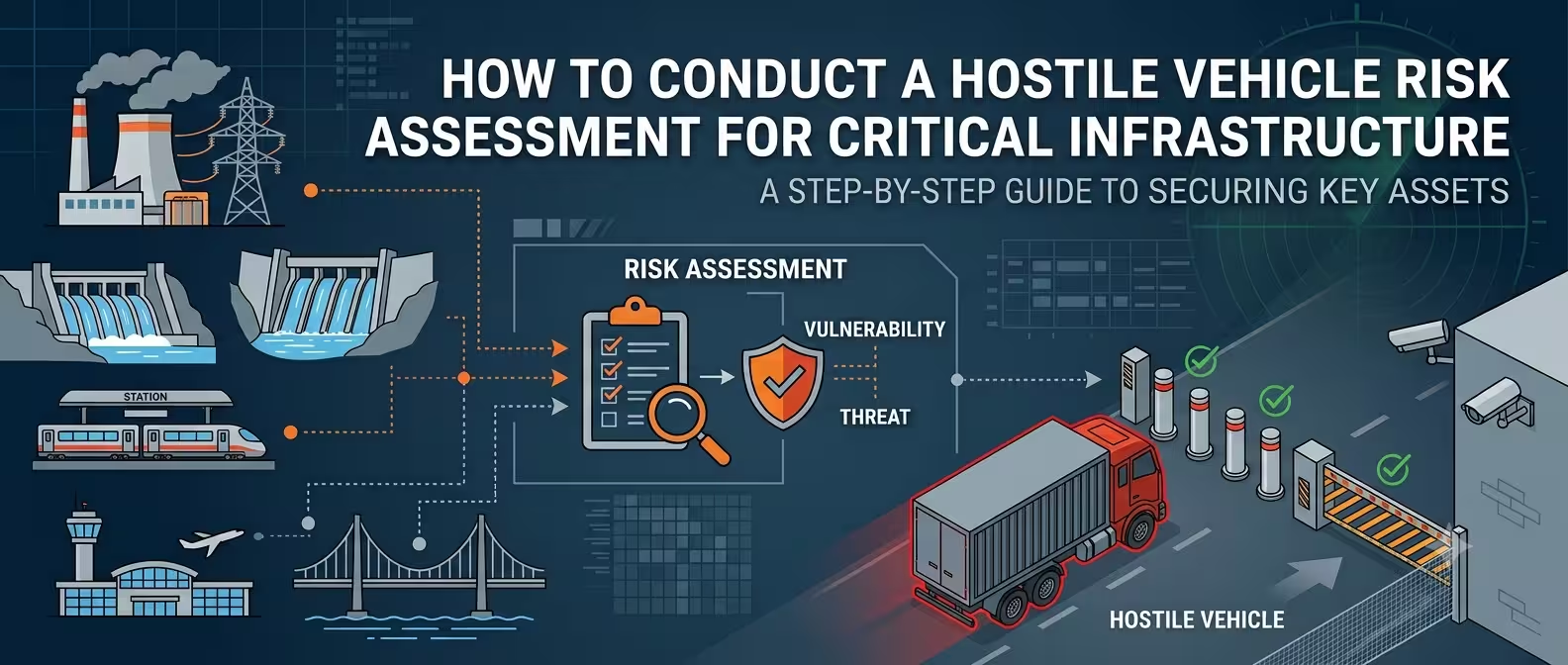
- Security Risk Level: Determine whether the site requires standard access control or hostile vehicle mitigation (HVM) with crash-rated protection.
- Traffic Volume: Evaluate the number of vehicles entering and exiting daily to select equipment capable of continuous operation.
- Vehicle Types: Consider whether the facility handles passenger cars, delivery vans, heavy trucks, buses, or emergency vehicles.
- Available Space: Site dimensions influence whether boom barriers, sliding gates, swing gates, bi-folding gates, or bollards are the most suitable solution.
- Access Control Method: Select technologies such as RFID, ANPR, QR codes, biometric authentication, smart cards, or mobile credentials based on operational needs.
- Integration Requirements: Ensure compatibility with CCTV, visitor management, building management systems (BMS), fire alarm systems, and centralized monitoring platforms.
- Environmental Conditions: Choose equipment designed to withstand local weather conditions, dust, humidity, heavy rainfall, and continuous outdoor operation.
- Maintenance & Lifecycle: Consider long-term maintenance requirements, spare part availability, and technical support to maximize system reliability.
Recommended Solutions by Facility Type
| Facility | Recommended Solution |
|---|---|
| Corporate Offices | Boom Barriers, RFID Access Control, ANPR Cameras |
| Industrial Facilities | Automatic Sliding Gates, Boom Barriers, RFID Systems |
| Warehouses & Logistics Parks | Automatic Gates, Boom Barriers, Truck Access Management |
| Data Centers | Crash Rated Gates, Road Blockers, Bollards, RFID Access Control |
| Government & Defence | Crash Rated Gates, Road Blockers, Crash Rated Bollards, Full Height Turnstiles |
| Airports & Seaports | Road Blockers, Automatic Gates, ANPR, Vehicle Inspection Systems |
| Power Plants & Critical Infrastructure | HVM Barriers, Crash Rated Gates, High Security Fencing, Integrated Access Control |
The most effective vehicle access control systems combine physical barriers, intelligent authentication technologies, and centralized monitoring. By selecting solutions tailored to operational requirements, organizations can improve security, streamline vehicle movement, and reduce unauthorized access while maintaining efficient day-to-day operations.
Frequently Asked Questions (FAQs)
1. What is a Vehicle Access Control System?
A Vehicle Access Control System (VACS) is a security solution that regulates and monitors vehicle entry and exit using technologies such as boom barriers, automatic gates, RFID, ANPR cameras, bollards, road blockers, and access control software.
2. Why is vehicle access control important?
It helps prevent unauthorized vehicle entry, improves site security, reduces traffic congestion, protects people and assets, and provides complete entry and exit records for monitoring and auditing.
3. Which industries use vehicle access control systems?
Vehicle access control systems are widely used in airports, government facilities, defence establishments, industrial plants, warehouses, logistics parks, data centers, commercial buildings, hospitals, educational campuses, residential communities, ports, and power plants.
4. What are the main components of a vehicle access control system?
A complete system may include boom barriers, automatic gates, crash-rated barriers, RFID readers, ANPR cameras, bollards, loop detectors, access control controllers, visitor management software, and CCTV surveillance.
5. What is the difference between a boom barrier and a crash-rated gate?
A boom barrier manages normal vehicle traffic, while a crash-rated gate is engineered to resist deliberate vehicle impact and provide hostile vehicle mitigation (HVM) for high-security locations.
6. Can vehicle access control systems integrate with RFID and ANPR?
Yes. Modern vehicle access control solutions can integrate with RFID tags, ANPR cameras, biometric systems, QR codes, visitor management software, and centralized security platforms.
7. What is ANPR in vehicle access control?
Automatic Number Plate Recognition (ANPR) uses cameras and intelligent software to identify vehicle registration numbers, automate entry, maintain logs, and enhance security.
8. How do RFID vehicle access systems work?
RFID systems identify authorized vehicles through RFID tags and readers. Once a valid credential is detected, the barrier or gate opens automatically without manual intervention.
9. Are vehicle access control systems suitable for high-security facilities?
Yes. Critical infrastructure facilities often combine crash-rated bollards, road blockers, security gates, access control, surveillance, and monitoring systems to achieve a layered security approach.
10. How do I choose the right vehicle access control solution?
The ideal solution depends on the site's security level, traffic volume, available space, operational requirements, and whether hostile vehicle mitigation is required. A professional site assessment helps determine the most suitable combination of products.
Looking for the Right Vehicle Access Control Solution?
Whether you're securing a corporate campus, industrial facility, airport, data center, government building, logistics hub, or critical infrastructure, selecting the right vehicle access control system is essential for safety, operational efficiency, and regulatory compliance.
Secure Innovative offers end-to-end vehicle access control solutions, including crash rated gates, automatic gates, boom barriers, road blockers, bollards, RFID systems, parking management solutions, and integrated access control technologies tailored to your project requirements.


