
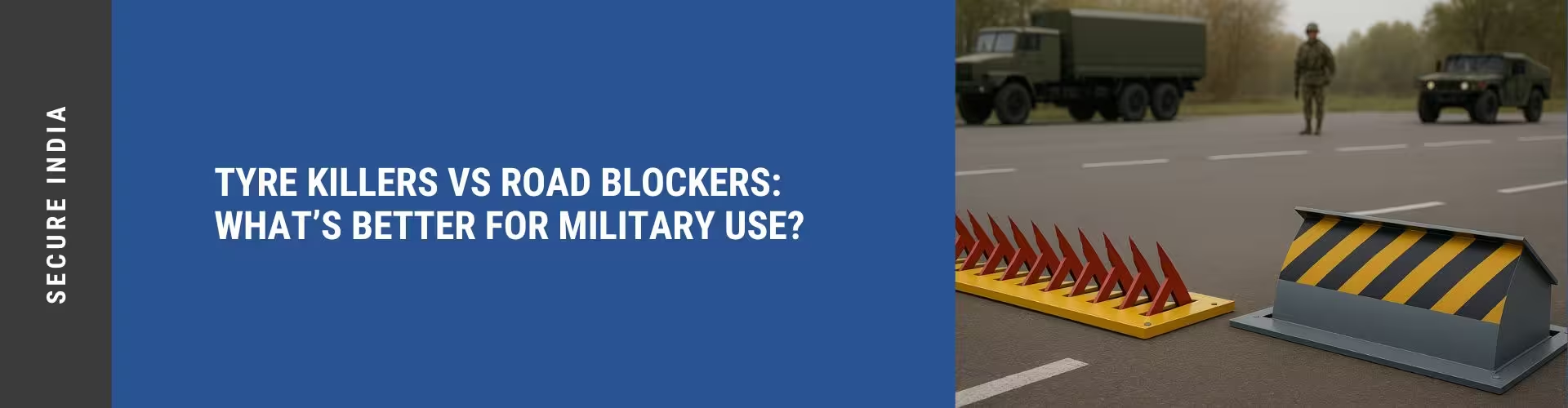
Tyre Killers vs Road Blockers: What's Better for Military Use?
Quick answer: Tyre killers are compact and cost-effective — best for side gates and temporary checkpoint stalls. Road blockers offer maximum stopping force for large vehicles — best for main gates and permanent high-risk zones. Many military bases use both together as a layered defense.
In military and high-security zones, choosing the right HVM system is essential. Tyre killers and road blockers each offer distinct benefits—and understanding their strengths is key to selecting the best fit.
What Are Tyre Killers?
Tyre killer systems utilize mechanized spike arrays that puncture tires to disable unauthorized vehicles. They can be:
- One-way models for egress control
- Bi-directional systems for both entry/exit control
Pros: Compact, cost-effective, quick deployment. Best for: Perimeter gates, checkpoints.
What Are Road Blockers?
Road blockers are heavy-duty barriers designed to stop vehicles altogether. They can be fixed, hydraulic, or rising blockers.
- Fixed blockers offer constant protection.
- Rising blockers can retract to allow vehicle movement.
Pros: Maximum stopping force for large vehicles. Best for: Main entrances and access control points.
Tyre Killers vs Road Blockers: Side‑by‑Side
| Feature | Tyre Killers | Road Blockers |
|---|---|---|
| Stopping Power | Disables tires, moderate slowdown | Full vehicle halt, high impact |
| Space Requirement | Compact, minimal footprint | Requires deep foundation, larger build |
| Cost | More affordable | Higher ROI, heavy‑duty investment |
| Return to Service | Tire repair needed | Reused immediately after lowering |
| Best Use Case | Short-term or compact sites | Permanent bases/checkpoints |
Which One Should You Choose?
For checkpoint stalls or temporary deployment, tyre killers offer quick deployment at low cost. For main gate control or high-risk zones, road blockers provide reliable and safe vehicle denial.
Conclusion
Both systems have a place in military HVM strategy. The best choice depends on threat model, layout, traffic flow, and long-term operational needs. Hybrid use—tyre killers at side gates and road blockers at main gates—is also a common defense layer.
Frequently Asked Questions
Are tyre killers or road blockers better for a military main gate?
Road blockers are generally better for a military main gate since they provide maximum stopping force for large vehicles and are designed for permanent, high-risk checkpoints. Tyre killers are better suited to side gates or temporary deployments.
Can tyre killers and road blockers be used together at a military base?
Yes. A common defense-layer strategy uses tyre killers at side gates for compact, cost-effective control and road blockers at main gates for maximum stopping power, creating layered vehicle denial across the perimeter.
Which is faster to return to service after activation, a tyre killer or a road blocker?
Road blockers can typically be reused immediately after lowering. Tyre killers require tire repair or spike reset before the affected lane returns to normal service.
Which is more cost-effective for temporary military deployments?
Tyre killers are generally more affordable and quicker to deploy, making them well suited to short-term or temporary checkpoint stalls compared to the larger investment required for road blockers.
How do I decide between a tyre killer and a road blocker for a defense site?
The decision depends on the threat model, site layout, traffic flow, and long-term operational needs of the specific checkpoint. Main gates and high-risk zones typically warrant road blockers, while side gates or compact sites suit tyre killers.
Related Comparisons
Contact Secure Innovative to get expert advice on tyre killers, road blockers, crash‑rated bollards, and full HVM systems tailored for military applications.


