
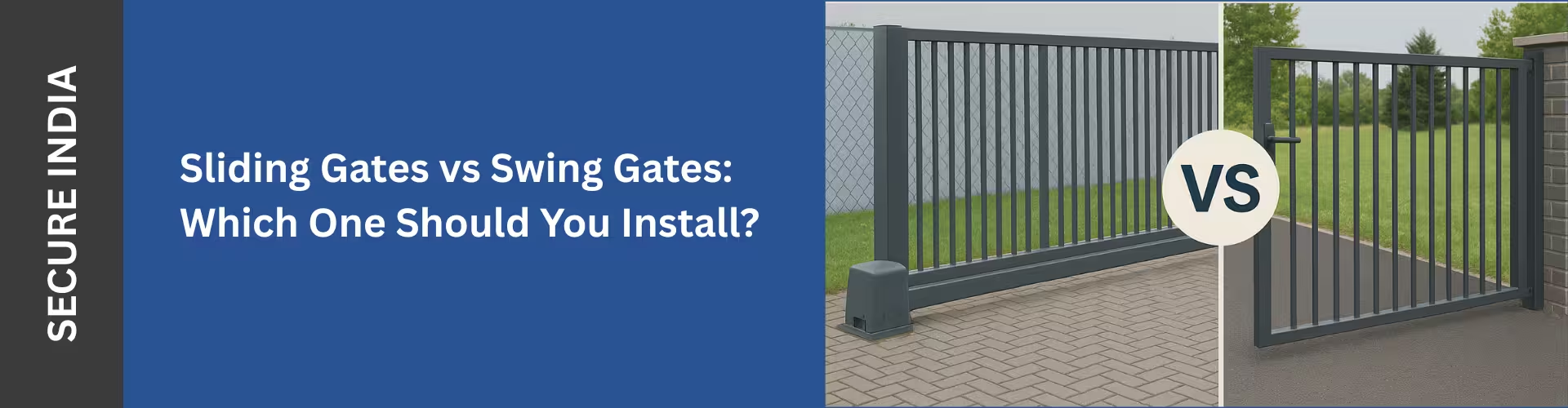
Swing Gate vs Sliding Gate: Industrial Access Solutions Compared
Quick answer: An industrial sliding gate suits manufacturing units, ports, and container terminals where space is limited and traffic is frequent. An industrial swing gate suits warehouses and logistic yards with adequate open space and lower traffic volume. Sliding gates generally offer higher security and space efficiency; swing gates offer lower upfront cost.
Industrial facilities demand secure and practical gate systems. This comparison evaluates swing and sliding gates based on space, efficiency, and application, so procurement teams and facility managers can choose the right entry system for their site.
What is a Swing Gate?
A swing gate opens inward or outward on hinges. They're economical and simple to install but require clear swing space. They are often used in low-to-medium security industrial applications.
What is a Sliding Gate?
A sliding gate moves horizontally along a track and is space-efficient. They offer smooth, automated operation ideal for frequent access points at industrial sites.
Where Are They Used?
- Swing Gates: Warehouses, utility enclosures, logistic yards
- Sliding Gates: Manufacturing units, ports, container terminals
Comparison Table
| Feature | Swing Gate | Sliding Gate |
|---|---|---|
| Space Required | High (arc movement) | Low (parallel movement) |
| Operation | Manual or automated | Mostly automated |
| Security Level | Medium | High |
| Maintenance | Low | Medium |
| Vehicle Throughput | Lower | Higher |
| Installation Cost | Lower | Higher |
| Best Terrain | Flat, open sites | Sloped or uneven sites |
When to Choose a Swing Gate for Industrial Use
- Adequate open space is available for the arc
- Traffic volume is relatively low
- Budget is a primary constraint
When to Choose a Sliding Gate for Industrial Use
- The site has high vehicle throughput
- Side space is limited for a swing arc
- Integration with ANPR or automated access control is required
Final Recommendation
Swing gates are cost-effective for sites with adequate clearance. Sliding gates are the preferred choice in high-traffic or limited-space industrial environments such as ports and container terminals. Many large industrial campuses use sliding gates at primary vehicle entries and swing gates at lower-traffic utility access points.
Frequently Asked Questions
Which is better for an industrial site, a swing gate or a sliding gate?
Sliding gates are generally preferred for industrial sites with high-traffic or limited space, since they move parallel to the boundary without needing swing clearance. Swing gates work well for warehouses and logistic yards with adequate open space.
Which gate type offers higher security for commercial and industrial use?
Sliding gates generally offer higher security for industrial applications since they are harder to force open and integrate well with automated access control and ANPR systems. Swing gates offer medium security, suitable for lower-risk industrial areas.
Do sliding gates need more maintenance than swing gates at industrial sites?
Yes, sliding gates typically require moderate maintenance for their track and rollers, especially in high-traffic industrial environments. Swing gates have simpler hinge mechanisms and generally need lower maintenance.
Where are sliding gates commonly used in industrial settings?
Sliding gates are commonly used at manufacturing units, ports, and container terminals where high vehicle frequency and space efficiency are priorities.
Where are swing gates commonly used in industrial settings?
Swing gates are commonly used at warehouses, utility enclosures, and logistic yards where traffic volume is lower and there is adequate space for the gate to swing open.
Related Comparisons
- Sliding Gates vs Swing Gates for Homes & Villas
- Automatic Gates vs Manual Gates
- Manual Boom Barriers vs Automatic Boom Barriers
- Bollards vs Crash Rated Gates
Need the Right Gate for Your Industrial Site?
Secure Innovative manufactures certified sliding and swing gates for manufacturing units, ports, warehouses, and logistics hubs.
Talk to Our Security Experts


