
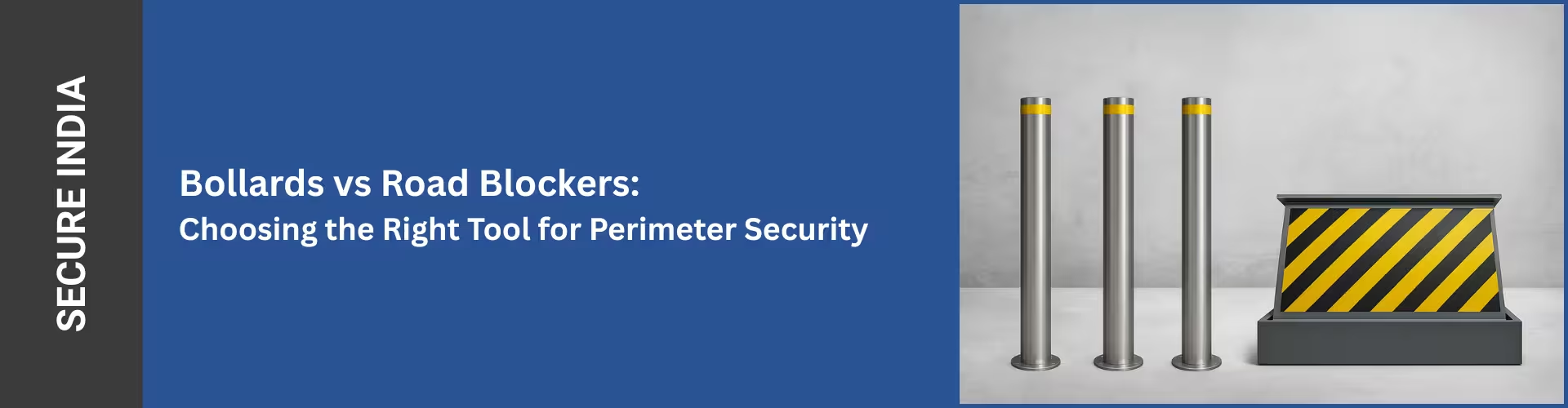
Bollards vs Road Blockers: Choosing the Right Tool for Perimeter Security
Quick answer: Bollards are short vertical posts that block vehicles while keeping pedestrian flow open — ideal for city centers and commercial buildings. Road blockers are heavy, crash-rated steel platforms that fully stop vehicles — ideal for embassies and defense compounds. Choose based on whether pedestrian access or maximum vehicle-stopping power matters more for your site.
Bollards are short vertical posts made of steel or concrete. They can be fixed or retractable and are used to guide or block vehicle entry without restricting pedestrian flow.
What is a Road Blocker?
Road blockers are robust steel structures that rise from the ground to physically prevent unauthorized vehicles. They are typically hydraulic and crash-rated to standards such as PAS68 and ASTM.
Where Are They Used?
- Bollards: City centers, commercial buildings, sidewalks
- Road Blockers: High-security compounds, embassies, defense buildings
Comparison Table
| Feature | Bollards | Road Blockers |
|---|---|---|
| Space Requirement | Minimal | Requires pit and control unit |
| Crash Rating | Available (K4, K8, K12) | Standard (PAS68, ASTM) |
| Cost | Low to Medium | High |
| Pedestrian Flow | Unaffected | Blocked |
| Deployment Speed | Instant (fixed) / Fast (automatic) | 1-2 seconds (emergency mode) |
| Best Application | Pedestrian-mixed urban zones | High-threat checkpoints |
Which One Should You Choose?
Bollards are best for places needing vehicle deterrence with minimal footprint, especially where pedestrians and vehicles share space. Road blockers are for critical facilities where maximum protection is required despite higher installation demands. Many high-security sites use both together — bollards along pedestrian-facing perimeters and road blockers at vehicle checkpoints.
Frequently Asked Questions
What is the main difference between bollards and road blockers?
Bollards are short vertical posts that block or guide vehicle entry while allowing pedestrian flow. Road blockers are heavy steel platforms that rise from the ground and are crash-rated to stop vehicles attempting forced entry, offering a stronger physical barrier.
Are bollards or road blockers more expensive to install?
Road blockers are generally more expensive since they require a pit foundation, hydraulic control unit, and crash-rated certification. Bollards have a lower installation cost and minimal space requirements.
Which offers better security, bollards or road blockers?
Road blockers generally offer stronger security since they are engineered and certified to standards like PAS 68 and ASTM to stop hostile vehicles. Crash-rated bollards can also offer strong protection, but road blockers create a complete physical barrier across the roadway.
Where are bollards typically used instead of road blockers?
Bollards are typically used in city centers, commercial buildings, and sidewalks where pedestrian flow must be maintained. Road blockers are used at high-security compounds, embassies, and defense buildings where full vehicle stoppage is required.
Can bollards and road blockers be used together?
Yes. Many high-security sites use bollards along pedestrian-facing perimeters and road blockers at vehicle checkpoints, combining space-efficient deterrence with certified vehicle-stopping power.
Need certification-level detail (K4/K8/K12, PAS68, IWA14)? See our Crash-Rated Bollards vs Road Blockers certification guide.
Not Sure Which Solution Fits Your Site?
Secure Innovative manufactures certified crash-rated bollards and road blockers (PAS68, ASTM, K4/K8/K12) for urban, commercial, and high-security infrastructure projects.
Talk to Our Security Experts


