
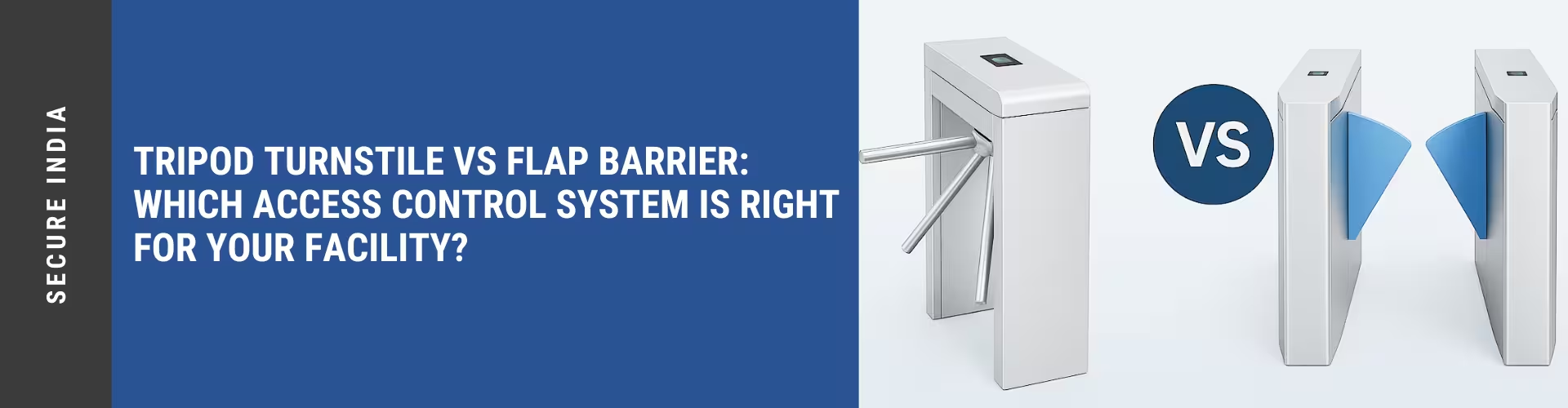
Tripod Turnstile vs Flap Barrier: Which Access Control System Is Right for Your Facility?
Quick answer: A tripod turnstile uses three rotating steel arms — durable and budget-friendly, best for factories, stadiums, and schools. A flap barrier uses sensor-based retractable flaps — faster, sleeker, better anti-tailgating, best for metro stations, airports, and corporate HQs.
When it comes to managing secure pedestrian entry and exit, Tripod Turnstiles and Flap Barriers are two of the most reliable and commonly used access control solutions. Both serve the same purpose — regulating foot traffic — but they differ significantly in design, security level, speed, and application. In this blog, we help you decide which one suits your facility best.
What is a Tripod Turnstile?
A tripod turnstile is a mechanical barrier with three rotating arms arranged in a tripod formation. It allows one person at a time to pass through after authentication via RFID, biometrics, face recognition, or access card.
- Durable stainless-steel structure
- Can be integrated with access control systems
- Operates in both directions
- Cost-effective solution for crowd control
- Common in offices, schools, industrial plants, and stadiums
What is a Flap Barrier?
A flap barrier gate uses retractable flaps (usually made of acrylic or polycarbonate) that slide into the turnstile body, allowing passage. They are commonly used in metro stations, airports, and high-security corporate offices.
- Sleek, modern design
- Fast passage — ideal for high footfall
- Sensor-based operation to prevent tailgating
- Compatible with biometric and RFID readers
- Aesthetic appeal with high-speed throughput
Tripod Turnstile vs Flap Barrier: A Feature-by-Feature Comparison
| Feature | Tripod Turnstile | Flap Barrier |
|---|---|---|
| Security Level | Medium (physical barrier) | High (sensors + flap control) |
| Speed | Moderate (manual or semi-automatic) | High (automatic & sensor-based) |
| Durability | High (robust stainless steel) | Moderate to High (polycarbonate/acrylic) |
| Design | Functional & industrial | Sleek & modern |
| Cost | Budget-friendly | Higher initial cost |
| User Experience | Basic | Smooth, high-end |
| Anti-tailgating | Limited | Advanced sensors prevent tailgating |
| Common Usage | Factories, stadiums, schools | Airports, metros, corporate offices |
Which One Should You Choose?
- You're looking for a cost-effective access control system
- The location doesn't require high-speed throughput
- The design priority is durability and simplicity
- Ideal for industrial zones, stadiums, warehouses, and universities
- You need premium aesthetics and fast access
- Your facility experiences high footfall
- You require higher security and anti-tailgating sensors
- Ideal for metro stations, airports, IT parks, and corporate HQs
Integration with Access Control Systems
Both systems can be seamlessly integrated with:
- RFID access cards
- Biometric scanners
- QR code readers
- Face recognition terminals
- Turnstile access control software
The right access control gate for your premises depends on your security goals, user flow, budget, and design aesthetics. While tripod turnstiles offer rugged durability and affordability, flap barriers provide a modern, efficient, and secure solution for high-end premises.
Frequently Asked Questions
What is the main difference between a tripod turnstile and a flap barrier?
A tripod turnstile uses three rotating steel arms to admit one person at a time, offering a durable, budget-friendly option. A flap barrier uses retractable acrylic or polycarbonate flaps with sensor-based tailgating detection, offering faster and sleeker access.
Which offers better anti-tailgating protection, tripod turnstile or flap barrier?
Flap barriers generally offer better anti-tailgating protection due to their sensor-based detection systems. Tripod turnstiles offer limited anti-tailgating capability, relying mainly on the physical arm barrier.
Which is more cost-effective, a tripod turnstile or a flap barrier?
Tripod turnstiles are generally more budget-friendly due to their simpler mechanical design. Flap barriers have a higher initial cost but offer faster throughput and a more premium appearance.
Where are flap barriers commonly installed?
Flap barriers are commonly installed in metro stations, airports, and high-security corporate offices where high footfall and fast, sensor-based access control are priorities.
Which should I choose for my facility?
Choose a tripod turnstile for cost-effective, durable access control in offices, schools, and industrial plants. Choose a flap barrier for high-footfall, high-security environments like metro stations and airports needing fast, sleek, sensor-based entry.
Need help choosing the right turnstile system for your facility?
Contact us today for expert advice or a site demo.


