
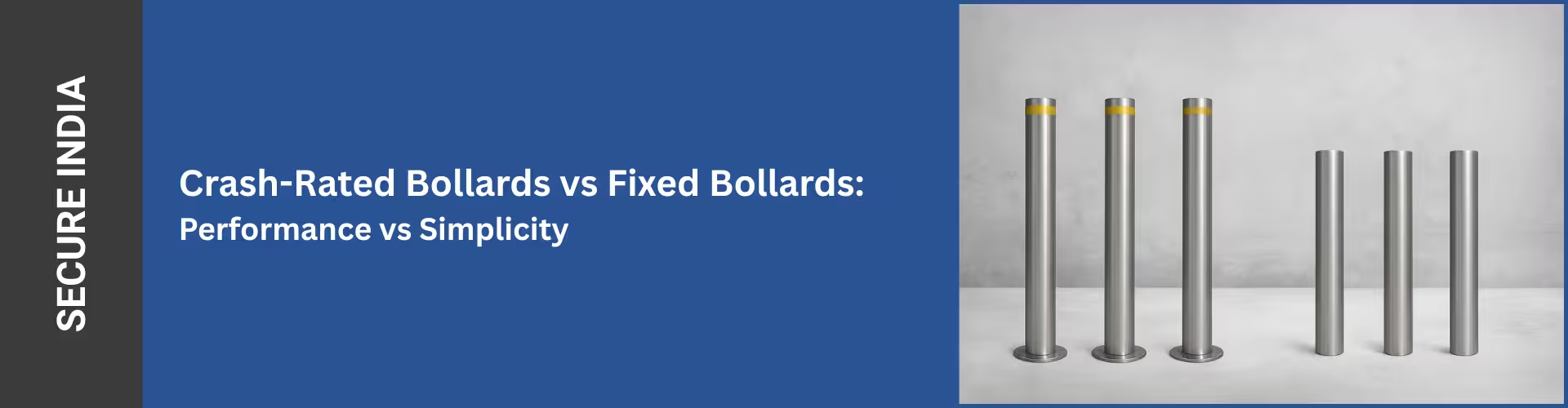
Crash-Rated Bollards vs Fixed Bollards: Performance vs Simplicity
Quick answer: Crash-rated bollards are certified to ASTM, PAS 68, or IWA 14 standards and tested to stop hostile vehicles — ideal for embassies, airports, and defense sites. Fixed bollards are non-tested, passive posts for general vehicle guidance and pedestrian safety — ideal for walkways and storefronts. Choose based on whether your site needs certified impact resistance or basic deterrence.
Both crash-rated and fixed bollards are used for perimeter protection, but their capabilities vary significantly. This blog compares the two to help you select the right solution for your facility.
What are Crash-Rated Bollards?
Crash-rated bollards are engineered and certified to withstand high-impact collisions. They are tested against global standards like ASTM, PAS68, or IWA14, and are used to stop hostile vehicles.
What are Fixed Bollards?
Fixed bollards are embedded into the ground and provide passive protection. They are not crash-tested but serve as deterrents for general vehicle control or pedestrian safety.
Where Are They Used?
- Crash-Rated Bollards: Embassies, airports, banks, defense sites
- Fixed Bollards: Walkways, storefronts, parks
Comparison Table
| Feature | Crash-Rated Bollard | Fixed Bollard |
|---|---|---|
| Impact Resistance | High (Tested) | Low (Non-tested) |
| Cost | High | Low |
| Installation | Complex | Simple |
| Application | High-threat zones | Pedestrian safety |
| Certification | ASTM, PAS 68, IWA 14 | None (typically) |
| Common Ratings | K4, K8, K12 | Not applicable |
Which One Should You Choose?
Crash-rated bollards are necessary for hostile vehicle mitigation at high-threat sites, while fixed bollards are suitable for general area protection and vehicle guidance where certified impact resistance isn't a requirement. Many commercial and government projects use fixed bollards along low-risk perimeters and reserve crash-rated bollards for critical entry points.
Frequently Asked Questions
What is the difference between crash-rated bollards and fixed bollards?
Crash-rated bollards are engineered and certified to standards like ASTM, PAS 68, or IWA 14, and are tested to stop hostile vehicles at a specific speed and weight. Fixed bollards are embedded in the ground for passive protection but are not crash-tested, serving as a general deterrent rather than a certified barrier.
Are all fixed bollards non-crash-rated?
Not necessarily. Some fixed bollards can also be manufactured and certified to crash ratings such as K4, K8, or K12. However, a standard fixed bollard without certification only provides passive, non-tested protection.
Where are crash-rated bollards typically required?
Crash-rated bollards are typically required at embassies, airports, banks, and defense sites, where certified protection against hostile vehicle threats is essential.
Where are standard fixed bollards typically used?
Standard, non-rated fixed bollards are typically used in walkways, storefronts, and parks, where the goal is general vehicle guidance and pedestrian safety rather than certified impact resistance.
Which is more cost-effective, a crash-rated or a fixed bollard?
Standard fixed bollards are more cost-effective and simpler to install. Crash-rated bollards cost more due to certified materials, engineering, and testing, but are necessary wherever hostile vehicle mitigation is a security requirement.
Not Sure Which Bollard Fits Your Site?
Secure Innovative manufactures certified crash-rated bollards (K4, K8, K12) and standard fixed bollards for commercial, government, and high-security infrastructure projects.
Talk to Our Security Experts


