
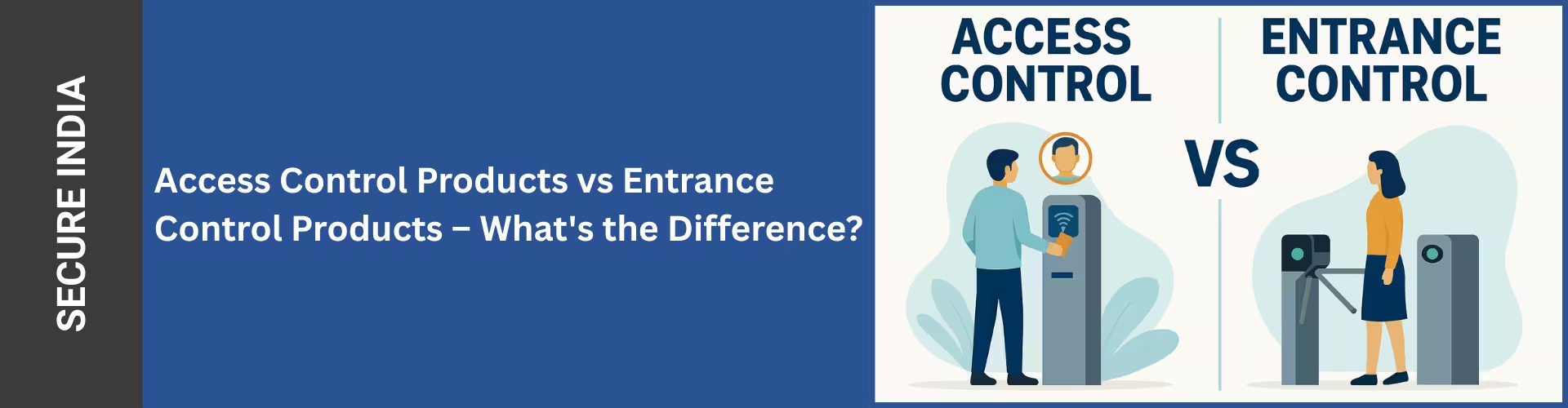
Access Control vs Entrance Control – What's the Difference?
Quick answer: Access control systems (RFID readers, biometrics, keypads) authenticate and authorize who gets access. Entrance control systems (turnstiles, flap barriers, boom barriers) physically enforce how they enter. Most high-security sites need both — access control decides, entrance control enforces.
In modern security architecture, two terms are often used interchangeably – Access Control and Entrance Control. However, they refer to distinct layers of security with unique functions. Understanding their differences is key to designing an integrated, secure environment.
What Are Access Control Products?
Access Control Products are systems designed to manage and restrict entry to physical or digital resources. These are primarily used to authenticate and authorize individuals before allowing access to a room, building, or IT system.
- RFID Card Readers
- Biometric Scanners (Fingerprint, Iris, Facial)
- Keypads with PIN entry
- Mobile-based access solutions
- Access Management Software / RFID Solutions
What Are Entrance Control Products?
Entrance Control Products are physical barriers or automated systems installed at entry/exit points. Their job is to enforce the decision made by the Access Control system – allowing or denying physical passage based on credentials.
- Turnstiles (Tripod, Full-Height)
- Flap Barriers & Swing Gates
- Boom Barriers
- Speed Gates
- Automatic Sliding Doors
Key Differences Between Access Control and Entrance Control
| Feature | Access Control | Entrance Control |
|---|---|---|
| Primary Function | Authentication & Authorization | Physical Passage Control |
| Form | Electronic Devices, Software | Physical Hardware Barriers |
| Examples | Biometric Readers, RFID, Keypads | Turnstiles, Flap Barriers, Boom Barriers |
| Security Role | Decides WHO gets access | Controls HOW they enter |
| Integration | Works with software platforms | Integrates with access control devices |
Do You Need Both?
In high-security environments such as airports, government buildings, corporate campuses, and industrial sites – both systems are essential. While access control verifies the identity and rights of a person, entrance control ensures the decision is enforced physically.
Example Scenario
A user scans their RFID card at a biometric reader (Access Control). If credentials are valid, a flap barrier opens (Entrance Control), allowing the person to enter.
Conclusion
While Access Control and Entrance Control serve different purposes, they are two sides of the same coin. Together, they offer layered protection against unauthorized access, intrusions, and data theft.
Frequently Asked Questions
What is the difference between access control and entrance control?
Access control systems authenticate and authorize who is allowed entry, using tools like RFID cards, biometrics, and keypads. Entrance control systems are physical barriers such as turnstiles and boom barriers that enforce the access control decision by physically allowing or denying passage.
Do I need both access control and entrance control?
Yes, for most high-security environments. Access control verifies identity and rights, while entrance control physically enforces that decision. Airports, government buildings, and corporate campuses typically use both together for layered protection.
What are examples of access control products?
Common access control products include RFID card readers, biometric scanners (fingerprint, iris, facial), PIN keypads, mobile-based access solutions, and access management software.
What are examples of entrance control products?
Common entrance control products include turnstiles (tripod and full-height), flap barriers, swing gates, boom barriers, speed gates, and automatic sliding doors.
How do access control and entrance control work together?
A typical flow is: a user presents credentials at an access control device, such as scanning an RFID card at a biometric reader. If the credentials are valid, the access control system signals an entrance control device, such as a flap barrier, to physically open and allow entry.
Secure Innovative provides end-to-end solutions, from biometric access systems to automated entrance barriers, tailored to your site's security needs.
Talk to Our Security Expert


